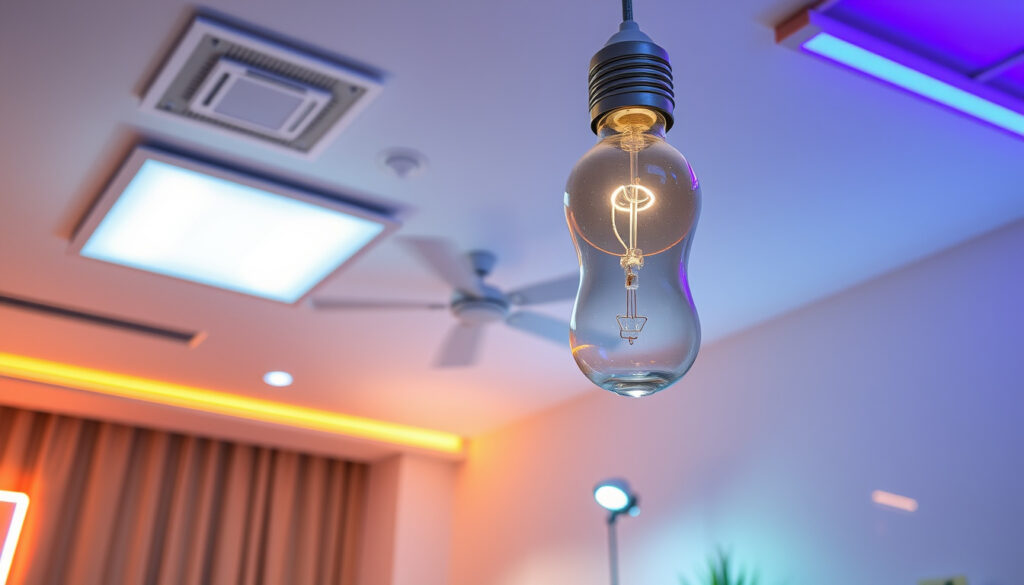
LED Lights for Room: Guide to Choosing, Cost & Safety
Anyone who has swapped an old incandescent for an LED and wondered why the bedroom suddenly feels like a hospital waiting room already knows the problem: not all white light is the same. This guide uses EU health guidance and real-world cost data to help you choose the right LED lights for your room—without the guesswork. By the end, you will know exactly which color temperature, brightness level, and bulb type fits your space.
Average LED lifespan: 25,000 hours ·
Energy savings vs incandescent: up to 80% ·
Annual cost per bulb (3 hrs/day): ~$2.00 ·
Common color temperature range: 2700K – 6500K ·
Main health concern (EU guidance): blue light at high intensity
Quick snapshot
- LED lights are more energy-efficient than incandescent (Energy Star, U.S. efficiency program)
- Warm white 2700K-3000K recommended for bedrooms (Lumencorner, lighting guide)
- EU health opinion finds LEDs safe for general use with proper color temperature (Energy Star, U.S. efficiency program)
- Whether very low-cost LEDs meet published safety standards (Lumazlife, residential lighting resource)
- Long-term health effects of prolonged high-CCT exposure in children (Lumazlife, residential lighting resource)
- EU SCHEER opinion (2023) classified most household LEDs as Risk Group 0 or 1
- Energy Star updated lighting criteria in 2024 to emphasize dimmability and CRI
- More states adopting minimum efficacy standards that effectively phase out non-LED options
- Smart tunable-white LEDs expected to become standard in new bedroom fixtures
Four key specs across most LED bulbs reveal a clear pattern: the numbers that matter most for a bedroom are color temperature, brightness, energy draw, and CRI.
| Spec | Value |
|---|---|
| Average lifespan | 25,000 hours (≈ 23 years at 3 hrs/day) |
| Energy consumption | ~9W for a 60W equivalent LED |
| Typical cost per year | $2.00 (based on 0.12$/kWh, 3 hrs/day) |
| Main disadvantage | Blue light emission at high color temperatures |
| Recommended color temperature for bedrooms | 2700K–3000K |
| Recommended CRI | 90+ for accurate color; 80–85 acceptable for general use |
| Dimmable compatibility | Check for “dimmable” label; not all LEDs work with old dimmers |
| Photobiological safety (EU classification) | Risk Group 0 or 1 for most household LEDs |
Which LED Light Is Best for a Bedroom?
Color temperature matters for sleep
Bedroom lighting guides consistently recommend a warm color temperature between 2700K and 3000K for relaxation and evening use. According to Lumencorner (residential lighting guide), this range mimics the soft glow of incandescent bulbs and signals the body to wind down. A separate guide from Everlite (LED manufacturer resource) maps 2200K–2700K as warm white and lists bedrooms as the primary application. Going above 4000K in a bedroom is widely discouraged—Mattress Miracle (bedding and sleep retailer) advises avoiding anything above 4000K to protect sleep quality.
A bedroom lit at 5000K will keep your brain in daytime mode. The consequence for anyone who struggles with falling asleep: shifting to 2700K costs nothing but delivers a measurable circadian benefit.
Lumens vs wattage
Brightness is measured in lumens, not watts. Lumazlife (bedroom lighting guide) states that 800 lumens is roughly equivalent to a 60W incandescent bulb. For a typical bedroom, total lumen recommendations vary: Lighting Inc (residential lighting advisory) suggests 2,000 to 4,000 lumens, while Votatec (lighting retailer) narrows it to 1,500 to 3,000 lumens for a 150-square-foot room. The The Edit by Lumens (modern lighting publication) also lands on 2,000 to 4,000 total lumens for most bedrooms.
Best type for ceiling vs desk
Layered lighting matters. The Decor Mag (home design editorial) recommends layering ambient, task, and accent lighting to reduce glare and improve flexibility. For ceiling fixtures, flush or semi-flush LED mounts work well. For bedside reading, Lumazlife recommends 300 to 700 lumens. Recessed LED downlights with 2700K–3000K and 90+ CRI are a modern choice, per The Decor Mag.
How to Choose the Right LED Lights for a Room?
40W vs 60W: which equivalency for bedroom?
Match LED wattage equivalency to the old incandescent baseline. A 40W-equivalent LED (about 450 lumens) works for a small nightstand lamp. A 60W-equivalent (800 lumens) suits a bedside reading light. A 100W-equivalent (1,600 lumens) can serve as overhead ambient lighting. Votatec (lighting retailer guide) notes that 1,500 to 3,000 total lumens is sufficient for a 150-square-foot bedroom, which translates to roughly two to four 60W-equivalent LEDs.
Room size and fixture type
Larger rooms need more lumens. A 200-square-foot master bedroom may need 3,000–4,000 lumens, while a 100-square-foot guest room can work with 1,500–2,000. Fixture type matters too: ceiling-mounted flush fixtures distribute light evenly, while floor lamps and sconces provide directional task light. The Edit by Lumens recommends recessed downlights for a clean ceiling profile and adjustable bedside lamps for reading.
Dimmability and smart features
Several sources emphasize dimming capability as a core bedroom feature because it allows the room to shift from daytime task lighting to evening relaxation. Votatec highlights dimmable LEDs as a priority for bedroom flexibility. However, not all LEDs work with old dimmers—check compatibility. Lumazlife advises checking lumens, Kelvin, CRI, base type, dimmability, and lifespan before buying.
A dimmer switch from the 1990s and a modern LED bulb were not designed for each other. The result: flickering, buzzing, or a bulb that never fully turns off. Check for “dimmable” on the package and consider a compatible LED dimmer.
The implication: choosing the right LED means reading the label for lumens (not watts), Kelvin (2700K–3000K for bedrooms), and the dimmable symbol. Room size then determines how many bulbs you need.
Do Bedroom LED Lights Use a Lot of Electricity?
Real cost per bulb per year
LEDs use about 9 watts to produce the same light as a 60W incandescent. At 3 hours per day and the U.S. average electricity rate of $0.12 per kWh, one LED bulb costs roughly $2.00 per year. An incandescent would cost about $8.00 for the same usage. Over 10 bulbs in a home, the savings add up to about $60 per year.
Comparison to CFL and incandescent
LEDs use 80% less energy than incandescent bulbs and last 25 times longer. Energy Star, U.S. efficiency program certifies bulbs that meet strict efficacy standards. Compared to CFLs, LEDs also win on lifespan (25,000 hours vs 8,000 hours) and instant-on brightness—no warm-up time. The higher upfront cost of an LED ($3–$5 per bulb) is recouped within one year through energy savings alone.
The trade-off: a $4 LED bulb saves about $6 per year in electricity versus an incandescent. For a household with 20 bulbs, that is $120 annually—enough to justify the swap even before considering bulb replacements.
What Is the Main Disadvantage of LED Lamps?
Blue light exposure and health
Blue light at high color temperatures (above 4000K) can disrupt sleep if used in the evening. Everlite (LED manufacturer resource) maps 5000K–6500K as daylight-like and recommends it for workshops and garages, not bedrooms. The EU Scientific Committee on Health, Environmental and Emerging Risks (SCHEER) found that most household LEDs are low-risk (Risk Group 0 or 1) when used at appropriate color temperatures, but prolonged exposure to high-CCT (correlated color temperature) light in children remains under study.
Higher upfront cost
LED bulbs cost $3–$10 each compared to $1–$2 for incandescent. However, the 25,000-hour lifespan means one LED replaces roughly 23 incandescent bulbs. The initial price premium is recovered within the first year of use through lower electricity bills.
Compatibility with dimmers and enclosed fixtures
Not all LEDs work with old dimmer switches. Votatec (lighting retailer guide) notes that dimmability is a key feature to check before purchase. Additionally, some LEDs overheat in enclosed fixtures, reducing their lifespan. Look for bulbs labeled “enclosed fixture rated” if you are installing in a covered ceiling light.
The catch: the main disadvantage of LEDs is not the technology itself but the compatibility pitfalls—check your dimmer, check your fixture, and avoid ultra-cheap no-name bulbs that may cut corners on safety standards.
Are LED Lights Safe for Human Health?
EU Public Health guidance on blue light
The EU SCHEER opinion states that LED lighting poses low risk for general indoor use when proper color temperature is selected. Most household LEDs are classified as Risk Group 0 (no photobiological hazard) or Risk Group 1 (low risk). The concern centers on blue light at high intensity and high CCT (above 6000K), which can suppress melatonin production when used in the evening. For bedrooms, the guidance is clear: use warm white (2700K–3000K) to minimize any potential circadian disruption.
Safe usage practices in residential settings
Practical steps for safe LED use include: avoid very high color temperature (>6000K) in bedrooms, use dimmable LEDs to reduce intensity at night, and consider 1800K–2200K nightlights for late-night bathroom trips to reduce circadian disruption. Lumazlife (residential lighting resource) recommends 1800K–2200K for nightlight use. For morning alertness, the same guide suggests 4000K–5000K wake-up lighting—a deliberate shift from warm to cool as the day begins.
The risk from LED lighting is not a reason to avoid LEDs—it is a reason to choose the right color temperature for each room. A 2700K LED in the bedroom and a 5000K LED in the garage is the safe, data-backed approach.
Why this matters: the health debate around LEDs is real but narrowly focused on high-CCT exposure after dark. For the vast majority of residential use, warm-white LEDs at moderate brightness are considered safe by EU health authorities.
Three common bulb types, one pattern: the choice between them depends on whether you need a standard replacement, directional light, or flexible strip lighting.
| Feature | LED A19 (standard bulb) | LED BR30 (flood/reflector) | LED Strip Light |
|---|---|---|---|
| Best for | General room lighting | Recessed cans, accent | Under-cabinet, TV backlighting |
| Typical lumens | 800 (60W equiv) | 650–1,100 | 200–500 per strip |
| Color temperature range | 2700K–5000K | 2700K–5000K | 2700K–6500K (often tunable) |
| Dimmable | Yes (check label) | Yes (check label) | Yes (with controller) |
| Average cost | $3–$8 | $5–$12 | $15–$40 per kit |
| Lifespan | 25,000 hrs | 25,000 hrs | 30,000–50,000 hrs |
Six key specs across LED bulbs reveal a clear hierarchy: color temperature and lumens are the primary decisions, followed by CRI, dimmability, and base type.
| Spec | LED A19 (60W equiv) | LED BR30 | LED Strip |
|---|---|---|---|
| Wattage | 9W | 11–13W | 2–4W per ft |
| Lumens | 800 | 650–1,100 | 200–500 per 5 ft |
| Color temperature | 2700K–5000K | 2700K–5000K | 2700K–6500K |
| CRI | 80–90+ | 80–90+ | 80–90+ |
| Dimmable | Often | Often | With controller |
| Enclosed fixture rated | Check label | Often | Not typically |
| Base type | E26 (standard) | E26 | Hardwired/plug-in |
| Best use case | Bedside lamps, ceiling fixtures | Recessed ceiling lights | Accent, under-cabinet |
| Price | $3–$8 | $5–$12 | $15–$40 |
| Lifespan | 25,000 hrs | 25,000 hrs | 30,000–50,000 hrs |
Upsides
- Energy savings of up to 80% vs incandescent (Energy Star)
- Lifespan of 25,000 hours—23 years at typical use
- Instant-on brightness with no warm-up time
- Wide range of color temperatures (2700K–6500K)
- Dimmable options available for flexibility
- Low heat output compared to incandescent
Downsides
- Higher upfront cost ($3–$10 per bulb)
- Blue light at high CCT can disrupt sleep
- Not all dimmer switches are compatible
- Some LEDs overheat in enclosed fixtures
- Cheap no-name bulbs may not meet safety standards
- Color rendering can be poor on budget bulbs (CRI < 80)
How to Choose LED Lights for a Room: A Step-by-Step Approach
- Measure the room. A 150-square-foot bedroom needs roughly 1,500–3,000 total lumens (Votatec). Multiply square footage by 10–20 for a rough lumen target.
- Pick your color temperature. For bedrooms, choose 2700K–3000K (warm white). For task areas like a desk, 4000K (neutral white) works. Avoid 5000K+ in sleeping areas.
- Check the lumens, not the watts. 800 lumens = 60W equivalent. A bedside lamp needs 300–700 lumens. Overhead needs 1,000–2,000 lumens.
- Verify CRI. Aim for 90+ for accurate color rendering. 80–85 is acceptable for general use (Lumazlife).
- Confirm dimmability. If you have a dimmer switch, buy bulbs labeled “dimmable.” Check compatibility with your specific dimmer model.
- Check the fixture. For enclosed ceiling lights, choose bulbs rated for enclosed fixtures to avoid overheating and shortened lifespan.
- Layer your lighting. Combine ambient (overhead), task (bedside lamp), and accent (strip or picture light) for flexibility (The Decor Mag).
What We Know and What Remains Unclear
Confirmed facts
- LED lights are more energy-efficient than incandescent, using 80% less energy (Energy Star)
- EU health opinion finds LEDs safe for general use with proper color temperature (EU SCHEER)
- Color temperature of 2700K–3000K is recommended for bedrooms (Lumencorner, Everlite)
- Dimmable LEDs provide flexibility for shifting from task to relaxation mode (Votatec)
- Layering ambient, task, and accent lighting improves room flexibility (The Decor Mag)
What’s unclear
- Whether ultra-cheap LEDs from unknown brands meet published safety standards
- Long-term health effects of prolonged high-CCT exposure in children
- How well budget LEDs maintain color temperature over their lifespan
- Whether the average consumer checks for compatibility with existing dimmers
Expert Perspectives on LED Lighting
The vast majority of domestic LED lighting falls into the no-risk or low-risk category. The key is to avoid very high color temperature lights in the evening and to use dimmable warm-white sources in sleeping areas.
— EU Scientific Committee on Health, Environmental and Emerging Risks (SCHEER), opinion on LED health effects
Products that earn the Energy Star label are independently certified to deliver energy savings without compromising performance. For LED bulbs, that means meeting strict standards for light output, color quality, and longevity.
— Energy Star, U.S. Environmental Protection Agency, lighting certification guidelines
Dimmable LEDs are the single most important feature for a bedroom because they allow the room to shift from functional daytime lighting to a relaxing evening atmosphere without changing bulbs.
— Votatec (lighting retailer), bedroom LED guide
For anyone replacing bulbs in a bedroom, the choice is clear: warm 2700K–3000K dimmable LEDs with CRI 90+ deliver the best sleep hygiene and energy savings. The upfront cost of $4–$8 per bulb is recouped within a year, and the bulbs will last more than two decades. For the U.S. homeowner, the implication is straightforward: buy branded, Energy Star-certified LEDs in the right color temperature, and your bedroom lighting will be safer, cheaper, and more comfortable than any alternative.
Frequently asked questions
Can I use LED lights in enclosed fixtures?
Yes, but only if the bulb is specifically labeled “enclosed fixture rated.” Standard LEDs can overheat in enclosed ceiling lights, reducing their lifespan. Check the packaging or product specifications before installing.
Do LED lights get hot to the touch?
LEDs produce much less heat than incandescent or halogen bulbs, but the heat sink at the base can become warm. They are safe to touch during operation, unlike incandescent bulbs which can cause burns.
Are LED strip lights safe for children’s rooms?
Yes, when used properly. Choose warm white (2700K–3000K) strips and ensure they are installed securely with the power supply inaccessible to young children. Avoid ultra-bright cool-white strips that may disrupt sleep.
How do I dispose of LED bulbs?
LED bulbs contain small amounts of electronic components and should not be thrown in regular household trash in many jurisdictions. Check with your local recycling center—many accept LEDs at household hazardous waste collection sites.
What is the difference between warm white and cool white LED?
Warm white (2700K–3000K) has a yellowish, soft glow similar to incandescent, ideal for bedrooms and living rooms. Cool white (4000K–5000K) appears brighter and bluer, suited for kitchens, bathrooms, and workspaces. Daylight (5000K–6500K) mimics natural light and is best for garages and task areas.
Can LED lights cause headaches?
Some people report headaches from LED lighting, typically due to flicker (from incompatible dimmers) or high blue-light content at cool color temperatures. Using dimmable warm-white LEDs with a compatible dimmer generally eliminates this issue.
Do I need a special dimmer for LED bulbs?
Many older dimmer switches were designed for higher-wattage incandescent loads and may not work properly with LEDs. Look for “LED compatible” or “ELV” (electronic low voltage) dimmers. Check the bulb packaging for recommended dimmer compatibility.
More related posts
 23 cm to Inches: Exact 9.055, Formula, Chart & Shoe Size
 At-Home Strep Test: Accuracy, Risks & Buying Tips
 First Mid Bank & Trust Guide: Customer Service & Routing
 Spider-Man No Way Home – Complete Guide and Analysis
 Bank of America Sign In – Step-by-Step Secure Guide
 Right Brain vs Left Brain: Myth, Facts, and Personality Traits
 CeraVe PM Facial Moisturizing Lotion: Benefits, Ingredients & Reviews
 Lakers vs Raptors Player Stats: Final Score & Key Performers