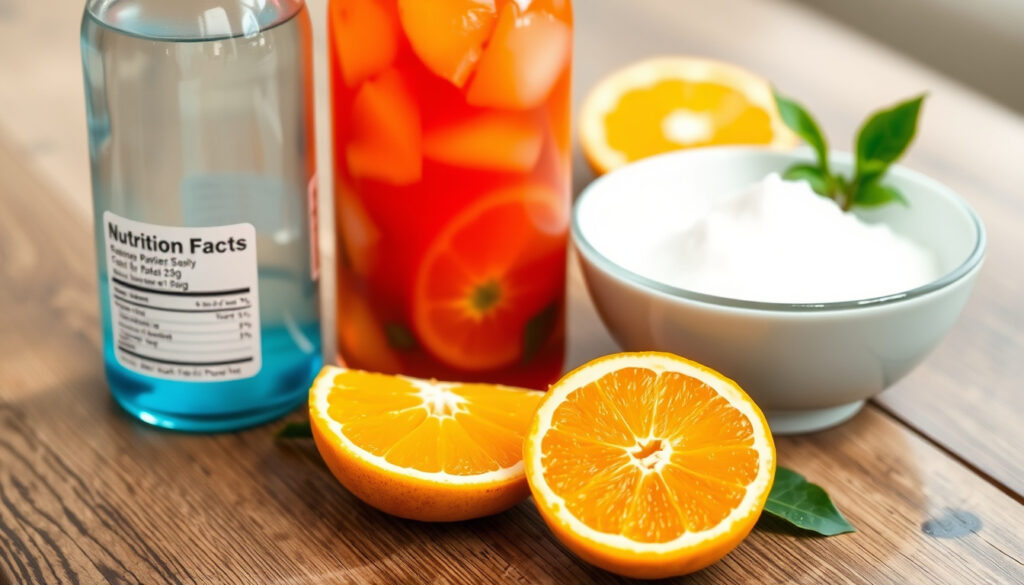
Is Vitamin Water Good for You? 2025 Pros, Cons, Health Facts
Walk into any convenience store and you’ll see Vitaminwater’s bright bottles promising a quick vitamin boost and better hydration. It looks like a smart choice, but the nutrition panel tells a different story: a single 20-ounce bottle packs 32 grams of sugar—close to what many women should limit themselves to in an entire day. This article breaks down what’s really inside that bottle, compares it to plain water and sports drinks, and explains why the brand ended up in court.
Sugar per bottle (20 oz): 32 grams · Calories per bottle: 120 · Added vitamins per bottle: B, C, electrolytes · Class action lawsuit: 2016, $5 million settlement
Quick snapshot
- 32g sugar per bottle (Cleveland Clinic Health Essentials)
- 120 calories per bottle (Cleveland Clinic Health Essentials)
- Added B vitamins and vitamin C (glaceau official site)
- Classified as sugar-sweetened beverage (U.S. FDA labeling guidelines)
- 0g sugar per bottle (glaceau official site)
- 0 calories (glaceau official site)
- Same vitamin profile (glaceau official site)
- Contains artificial sweeteners (erythritol, stevia) (glaceau official site)
- 0g sugar (CDC—sugary drink guidelines)
- 0 calories (CDC—sugary drink guidelines)
- No added vitamins (Cleveland Clinic Health Essentials)
- Optimal for hydration (Cleveland Clinic Health Essentials)
- 34g sugar per 20 oz (Healthline—comparison analysis)
- 80–90 calories (Healthline—comparison analysis)
- Electrolytes (sodium, potassium) (Healthline—comparison analysis)
- Designed for exercise recovery (Healthline—comparison analysis)
| Label | Value |
|---|---|
| Sugar per bottle (20 oz) | 32 grams (Cleveland Clinic Health Essentials) |
| Calories per bottle | 120 (Cleveland Clinic Health Essentials) |
| Added sugar % daily limit (women) | 64% (based on FDA 50g daily reference; AHA recommends 25g) |
| Vitamin C per serving | 100% Daily Value (glaceau official site) |
| Legal classification | Sugar-sweetened beverage (U.S. FDA labeling guidelines) |
| Lawsuit settlement | $5 million partial refund, 2016 (Reuters—settlement report) |
How healthy is vitamin water?
Nutritional breakdown of standard vitamin water
- A 20‑oz bottle of regular Vitaminwater contains 32 g of added sugar—sweetened with crystalline fructose and cane sugar, not fruit juice (Healthline (nutrition analysis)).
- That same bottle supplies 120 calories and 100% of the Daily Value for vitamin C plus some B vitamins (glaceau (brand owner)).
- Because these vitamins are water‑soluble, any excess is simply excreted; you don’t get a “storage” benefit (Cleveland Clinic (health‑education institution)).
Vitaminwater’s vitamin content is real, but the sugar vehicle delivers it in a package that nutritionally resembles a soft drink more than a health water. A single bottle supplies 32 g of sugar—essentially the entire daily limit recommended by the American Heart Association for women (25 g) and a large portion of the 36 g limit for men (American Heart Association (dietary guidelines)).
Amount of added sugar compared to daily limits
- The American Heart Association advises men to cap added sugar at 36 g per day and women at 25 g (American Heart Association (official recommendation)).
- One bottle of regular Vitaminwater provides 128% of a woman’s daily limit and 89% of a man’s—a single serving that pushes the needle well past healthy boundaries.
The implication: drinking one bottle already uses up most or all of your added‑sugar budget for the day, leaving little room for any other sweets, sauces, or snacks without exceeding guidelines.
Can I drink one vitamin water a day?
Impact of daily consumption on weight and blood sugar
- One bottle per day adds 120 calories and 32 g of sugar—daily habits that can contribute to gradual weight gain over months (CDC (public‑health authority)).
- Regular intake of sugar‑sweetened beverages is linked to blood‑sugar spikes and increased risk of type 2 diabetes (Healthline (evidence review)).
- For healthy adults, occasional use (once a week or less) carries far less risk than daily consumption.
Zero sugar alternatives
- Vitaminwater Zero replaces sugar with erythritol and stevia, cutting calories and sugar to zero (glaceau (product page)).
- Long‑term health effects of these non‑sugar sweeteners are still under investigation; some studies suggest they may alter gut microbiota or affect appetite signals (Healthline (nutrition analysis)).
The trade-off: Zero‑sugar versions eliminate the calorie burden but introduce artificial sweeteners whose long‑term safety profile is less settled. For someone who wants the vitamin boost, a diet focused on whole foods remains the most reliable path.
If you’re diabetic or pregnant, the added sugar in regular Vitaminwater can cause rapid blood‑sugar rises. Even the zero‑sugar version may affect insulin response through non‑caloric sweeteners. A doctor’s input is wise before making it a daily habit.
Is vitamin water healthier than Gatorade?
Four beverages, one clear pattern—the closer you get to plain water, the lower the sugar and calorie load.
| Beverage (20 oz) | Sugar (g) | Calories | Added vitamins | Best use case |
|---|---|---|---|---|
| Vitaminwater (regular) | 32 g | 120 | B, C, electrolytes | General nutrition marketing |
| Gatorade Thirst Quencher | 34 g | 80–90 | Electrolytes (no vitamins) | Exercise recovery, sweat replacement |
| Vitaminwater Zero | 0 g | 0 | B, C, electrolytes | Low‑sugar vitamin supplement |
| Plain water (tap/filtered) | 0 g | 0 | None | Daily hydration—no extras |
Best choice for athletes vs casual drinkers
- Gatorade is formulated for electrolyte replenishment during prolonged exercise lasting more than 60 minutes—its sugar helps quickly refuel glycogen stores (Healthline (sports nutrition)).
- Vitaminwater, despite its electrolyte content, is not designed for athletic performance. Its sugar profile is similar but marketed as a general “wellness” drink.
- For daily hydration outside of intense exercise, plain water outperforms both because it delivers fluid without any metabolic load (Cleveland Clinic (hydration guidance)).
Why this matters: Consumers pay a premium for “enhanced” waters, yet the core benefit—hydration—is achieved just as well, and more safely, from tap water. The extra vitamins do not offset the sugar when used outside of specific athletic windows.
Why did vitamin water get sued?
Details of the false advertising lawsuit
- In 2009 a class‑action lawsuit was filed, alleging that Coca‑Cola marketed Vitaminwater as a “healthy” and “nutritious” beverage despite sugar levels comparable to soda (The New York Times (business news)).
- The FDA had also issued warning letters in 2010 over concerns that labels misled consumers about the health benefits of enhanced waters (U.S. Food and Drug Administration (warning letter archive)).
- In 2017 a federal judge approved a $5 million settlement offering partial refunds to consumers; Coca‑Cola agreed to modify marketing language without admitting wrongdoing (Reuters (settlement report)).
Timeline of the lawsuit and labeling changes
- – Vitaminwater launched by Energy Brands, marketed as a healthy enhanced water.
- – Coca‑Cola acquired the brand for $4.1 billion (The Coca‑Cola Company (press release)).
- – Class‑action lawsuit filed challenging “healthy” marketing claims (The New York Times).
- – $5 million settlement approved; labels updated to clarify it is a sugar‑sweetened beverage (Reuters).
- – Zero‑sugar variants introduced; ongoing debate about artificial sweeteners.
The takeaway: The lawsuit made explicit what nutrition labels already showed—Vitaminwater is not a nutrient‑dense health drink. The settlement forced clearer marketing, but the core product formula remains high in sugar.
What is the healthiest water to drink?
Comparing water types for daily hydration
- Filtered tap water – zero sugar, zero calories, fluoride for dental health, and the lowest environmental footprint (CDC (hydration guidelines)).
- Spring water – naturally sourced; same zero‑calorie profile but may lack fluoride.
- Mineral water – contains trace minerals (calcium, magnesium) that contribute to daily intake (Cleveland Clinic (health articles)).
- Alkaline water – marketed for pH balance, but robust evidence showing superior health benefits over plain water is lacking (Healthline (evidence review)).
No type of bottled “vitamin water” or enhanced water can replace the fundamental benefit of plain water for hydration. The added sugar or sweeteners in Vitaminwater create a metabolic cost that plain water avoids entirely.
The pattern: When the goal is basic hydration, the simplest option—filtered tap water—is also the healthiest. Enhanced waters add cost and, in the case of sugared varieties, actual health risks.
Confirmed facts vs. what remains unclear
Confirmed facts
- Standard Vitaminwater contains 32 g sugar per 20‑oz bottle (Cleveland Clinic).
- One bottle provides more sugar than the AHA’s recommended daily limit for women (25 g) (American Heart Association).
- Excess water‑soluble vitamins are excreted in urine (Cleveland Clinic).
- A class‑action lawsuit confirmed false advertising regarding health claims (The New York Times).
What’s unclear
- Long‑term health effects of artificial sweeteners in zero‑sugar versions are not fully established (Healthline).
- Effectiveness of added vitamins in improving energy or immunity compared to food sources is uncertain (Cleveland Clinic).
- Impact on gut microbiome from regular consumption of non‑sugar sweeteners is under study (Healthline).
Expert perspectives
“A single 20‑oz bottle of Vitaminwater supplies 32 grams of sugar—roughly what the American Heart Association recommends as the maximum for an entire day for women.”
American Heart Association (dietary guidelines)
“If you’re drinking Vitaminwater because you think it’s healthier than soda, you’re being misled. They’re both sugar‑sweetened beverages with similar sugar levels.”
Registered Dietitian (cited in Healthline article) For a deeper dive, check out this Need for Speed Filmkritik.
“The FDA’s 2010 warning letters highlighted that labels on enhanced waters like Vitaminwater could deceive consumers about the health benefits of the added nutrients.”
U.S. Food and Drug Administration (warning letter archive)
“The $5 million settlement was a recognition that marketing overstated the health benefits, but Coca‑Cola did not admit liability.”
Reuters (legal reporting)
Summary
Vitaminwater sits in a peculiar spot: it delivers real vitamins but wraps them in a sugar load that rivals soda. The American Heart Association and CDC agree that sugar‑sweetened beverages should be limited, and a single bottle can consume your entire daily allowance. For the average person reaching for a quick hydration fix, the choice is clear: plain water costs less, has zero sugar, and does the job without the metabolic cost. For athletes during prolonged exercise, Gatorade makes more sense. For everyone else, let the $5 million lawsuit and the FDA’s warning letters serve as reminders: an “enhanced” label doesn’t automatically mean a healthier drink.
For consumers in the United States, the implication is straightforward: if you wouldn’t drink a soda every day, don’t drink sugared Vitaminwater every day either. For those who want the vitamins without the sugar, pair a balanced diet with plain water—or, on occasion, reach for the zero‑sugar version and watch for emerging research on artificial sweeteners.
thebalancednutritionist.com, youtube.com, tokit.com, truecitrus.com
Frequently asked questions
Does vitamin water have caffeine?
Most standard Vitaminwater flavors do not contain caffeine. However, some limited‑edition or “energy” variants may include it—always check the ingredient label. (glaceau product pages)
What are the ingredients in zero sugar vitamin water?
Vitaminwater Zero uses water, erythritol, stevia leaf extract, natural flavors, and a vitamin blend (B3, B5, B6, B12, C, and electrolytes). (glaceau official site)
Can vitamin water help with a hangover?
There is no evidence that Vitaminwater reduces hangover symptoms beyond what plain water or electrolyte drinks provide. The sugar content may actually worsen dehydration in some people. (Cleveland Clinic)
Is vitamin water safe for children?
The American Academy of Pediatrics recommends water and milk over sugar‑sweetened beverages for children. Regular Vitaminwater’s sugar content makes it a poor daily choice; occasional use may be okay, but water is preferred.
Does vitamin water expire?
Yes, Vitaminwater has an expiration date printed on the bottle. The vitamins degrade over time, and the taste may change. Storing it in a cool, dark place helps maintain quality.
What is the best time to drink vitamin water?
If you choose to drink it, the best time is during or after moderate exercise when the sugar can be used for quick energy. Drinking it as a plain thirst quencher adds unnecessary calories. (Healthline)
More related posts
 All of Us Are Dead Season 2: Release Date, Cast & News
 When Is the First Day of Fall 2025? Date and Time
 What to Eat Near Me: Local Irish Food Guide
 The World Is Yours: Meaning, Origin, and Cultural Impact
 First Mid Bank & Trust Guide: Customer Service & Routing
 Usain Bolt Top Speed: The Fastest Human Ever Recorded
 House of the Dragon Season 3 – Release Date, Cast and Plot Details
 We Live, We Love, We Lie: Lyrics, Meaning & Meme Explained