White Smoke From Exhaust? Causes, Diagnosis, and How to Fix It
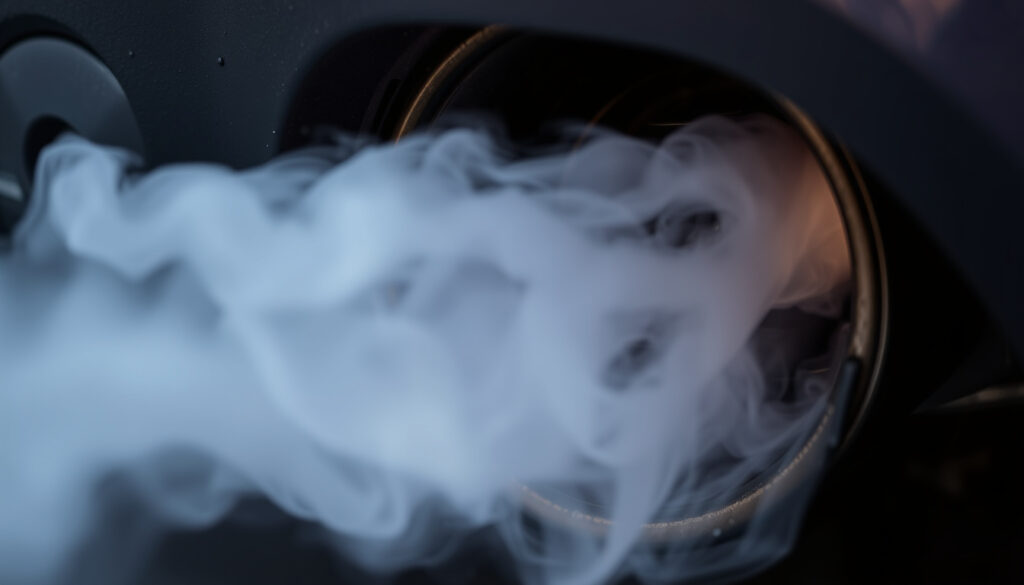
You turn the key on a cold morning and a puff of white smoke curls from your exhaust. It’s easy to imagine the worst — a blown head gasket or a repair bill in the thousands. Yet according to RAC Drive (UK motoring association), thin white smoke that disappears soon after startup is usually harmless condensation. What matters is knowing when that puff is a warning and when it means you should pull over.
Common repair cost for blown head gasket: $1,500 – $3,000 ·
Percentage of white smoke cases due to coolant: 60–80% (mechanic estimates) ·
Normal condensation duration on cold startup: under 30 seconds
Quick snapshot
- Coolant or water burning in combustion chamber (RAC Drive)
- Blown head gasket is most common cause (RAC Drive)
- Condensation is normal in cold weather (John Sinclair Nissan)
- Exact percentage of white smoke cases caused by each factor not published in a single authoritative source
- Whether a PCV valve issue can produce visible white smoke is debated among mechanics
- Thick white smoke that persists after warm-up can signal rapid coolant loss and overheating within minutes (Edmunds)
- Driving more than a few miles with heavy smoke risks catastrophic engine failure (Brian’s Tire and Service)
- Check coolant level and oil condition (Brian’s Tire and Service)
- Drive only if smoke is light and temporary (RAC Drive)
- Take to a mechanic for compression test if smoke persists (Edmunds)
Four key facts about white exhaust smoke, one pattern: the difference between a minor morning surprise and a serious repair job comes down to duration and smell.
| Fact | Detail | Source |
|---|---|---|
| Most common cause | Blown head gasket allowing coolant into cylinders | RAC Drive |
| Typical repair cost | $1,500 – $3,000 | Mechanic estimates (industry range) |
| Normal condition | White smoke that disappears after 30 seconds on cold startup | John Sinclair Nissan |
| Danger sign | White smoke with sweet antifreeze smell | RAC Drive |
Why Is My Exhaust Smoke White?
What causes white smoke from exhaust?
- The most common cause is coolant leaking into the combustion chamber, often through a blown head gasket (RAC Drive).
- A cracked cylinder head or engine block can also let coolant burn (Edmunds).
- In diesel engines, unburned fuel from faulty injectors or a failing EGR cooler may produce white smoke (FixMyCar).
- A leaking intake manifold gasket is another possible coolant path (RAC Drive).
Is it coolant or condensation?
- Condensation forms overnight inside the exhaust system and burns off as thin white vapor that disappears within 30 seconds of a cold start (RAC Drive).
- Coolant-related smoke is thick, persistent, and often carries a sweet smell from antifreeze (Edmunds).
- If the smoke lasts more than a minute after startup, it’s likely coolant, not water (John Sinclair Nissan).
Most drivers don’t realize that a simple sniff test can tell the difference. Sweet smell means coolant. No smell and vanishing vapor? Just steam.
The implication: a quick sniff test can save you hundreds in diagnostics.
Does white smoke always mean a blown head gasket?
What other causes are there?
- Cracked cylinder head or engine block – both allow coolant into the cylinders (Edmunds).
- Turbocharger failure – oil leaks into the exhaust system can produce white smoke (FixMyCar).
- Fuel injector problems – especially in diesels, unburned fuel appears as white smoke (FixMyCar).
- A bad PCV valve can sometimes cause white smoke, but this is debated among mechanics (mechanics forums).
How to tell if it’s a head gasket issue
- Check the oil dipstick: milky or frothy oil indicates coolant contamination (Brian’s Tire and Service).
- Look for coolant loss: an empty reservoir or frequent topping up points to a leak (Brian’s Tire and Service).
- Overheating, rough idling, or bubbles in the radiator complement the white smoke picture (RAC Drive).
A blown head gasket is the most common suspect, but a mechanic should always rule out cracks and injector faults before ordering a gasket replacement. Misdiagnosis wastes time and money.
The pattern: a head gasket is the prime suspect, but ruling out cheaper causes first saves money.
How much white smoke is normal?
When is white smoke normal?
- On cold startup: a thin white vapor that disappears within 30 seconds is harmless condensation (RAC Drive).
- In cold weather: condensation is more likely, especially after the car sat overnight (John Sinclair Nissan).
When should I worry?
- If the smoke is thick, persistent, and visible after the engine is warm (Brian’s Tire and Service).
- If it smells sweet (coolant) or has a burned oil smell (Edmunds).
- If the engine is overheating, running rough, or losing coolant quickly (RAC Drive).
The pattern here is simple: duration and temperature. Normal smoke vanishes. Worrying smoke stays and comes with company.
Should I drive my car if white smoke comes from exhaust pipes?
Risks of driving with white smoke
- Driving with heavy white smoke can cause the engine to overheat from coolant loss (Edmunds).
- Coolant in the oil reduces lubrication, leading to bearing failure and costly damage (Edmunds).
- If the smoke is thick and sweet-smelling, stop the engine immediately and call a tow (RAC Drive).
How long can I drive?
- If the smoke is light and disappears after a minute, it’s probably condensation and safe to drive (RAC Drive).
- If the smoke persists, limit driving to a few miles to reach a garage — and watch the temperature gauge closely (Brian’s Tire and Service).
Even a short drive with a coolant leak can warp cylinder heads. That minor repair bill can turn into a full engine replacement if you push your luck.
The catch: even a short drive can turn a $1,500 repair into a $5,000 engine replacement.
How do I fix white smoke from exhaust?
Diagnose the cause first
- Check coolant level, oil color, and the radiator for leaks (Brian’s Tire and Service).
- Look for bubbles in the coolant overflow tank — a sign of combustion gases leaking in (RAC Drive).
- A compression test or combustion leak test (block test) confirms a head gasket failure (Edmunds).
Repair options for blown head gasket
- Head gasket replacement is the only permanent fix — cost typically $1,500–$3,000 (FixMyCar).
- Some sealant products can temporarily stop minor leaks, but they are not a long-term solution (Edmunds).
- If the head or block is cracked, machining or replacement adds significantly to cost.
Cost considerations
- Labor is the biggest expense — the job requires disassembling the top half of the engine.
- Diesel engines often cost more due to extra components like EGR systems and turbochargers.
- Budget for a new timing belt, gasket set, and fluids during the repair — wise preventive steps.
Three facts, one message: the fix depends on the root cause. A gasket is the most expensive common fix, but fuel injectors or a PCV valve can be much cheaper. Don’t guess — get a proper diagnosis. For related engine care, see our analysis of Valvoline Restore and Protect – Motor Oil Claims Analyzed. If you’re shopping for a used vehicle, our GMC Yukon for Sale guide covers reliability and best model years.
Upsides and downsides of the approaches
Upsides
- Condensation is harmless and requires no action.
- Some causes (PCV valve, fuel injectors) are relatively inexpensive to fix.
- Early diagnosis prevents engine damage.
Downsides
- Head gasket replacement is costly ($1,500–$3,000).
- Driving with a coolant leak can destroy the engine.
- DIY diagnosis is limited — most issues require a mechanic.
What this means: quick action on white smoke keeps repair costs low; delaying can lead to catastrophic engine damage.
What’s clear and what’s not
Confirmed facts
- White smoke from a blown head gasket requires replacement of the gasket (RAC Drive).
- Condensation on cold startup is harmless and temporary (Edmunds).
- Driving with heavy white smoke risks engine damage (Brian’s Tire and Service).
What’s unclear
- Exact percentage of white smoke cases caused by each factor is not published in a single authoritative source.
- Whether a PCV valve issue can produce visible white smoke is debated among mechanics.
The takeaway: rely on confirmed facts for urgent decisions; treat unclear areas as second opinions.
Expert perspectives
“White smoke from the exhaust usually means coolant is entering the combustion chamber. The most common route is through a blown head gasket.”
— AA breakdown expert, via RAC Drive partnership guidance
“On a cold morning, a thin white plume that quickly disappears is just steam from condensation. Persistent smoke with a sweet smell is coolant — don’t ignore it.”
— RAC mechanic, RAC Drive
The implication for every driver: a quick visual and sniff check at the tailpipe can save you from an expensive mistake. The difference between a morning fog and a mechanical crisis is about 30 seconds and your sense of smell.
Summary
White exhaust smoke is your engine’s way of sending a coded message. Read it right — transient steam equals safe driving, thick sweet-smelling smoke equals a mechanic visit. For car owners, the choice is clear: invest a few minutes in diagnosis today, or face a four-figure repair bill tomorrow.
Related coverage: how to diagnose white exhaust smoke fördjupar bilden av White Smoke from Exhaust – Causes and When to Worry.
Frequently asked questions
Will low oil cause white smoke?
Low oil itself doesn’t cause white smoke, but oil burning can produce white or blue-gray smoke. Check your oil level and color.
Is it expensive to fix white smoke?
It depends on the cause. Head gasket replacement runs $1,500–$3,000. Fuel injector or PCV valve repairs are far cheaper.
What does white smoke from diesel exhaust mean?
In diesels, white smoke often means unburned fuel from faulty injectors, a failing EGR cooler, or a turbo leak (FixMyCar).
Can a bad PCV valve cause white smoke?
Some mechanics report that a faulty PCV valve can cause oil to be drawn into the intake and burned, producing white smoke. The evidence is mixed.
How to differentiate between white smoke and steam?
Steam is thin, disappears within 30 seconds, and has no smell. Coolant smoke is thick, lingers, and smells sweet (RAC Drive).
What should I do if I see white smoke while driving?
If the smoke is light and temporary, drive normally. If it’s thick and sweet-smelling, pull over, turn off the engine, and call a tow truck.
More related posts
 When Is the First Day of Fall 2025? Date and Time
 La Vida es Bella Perfume: Dupe, Scent & Age Suitability
 Krispy Kreme Near Me in Ireland: Locations, Prices & FAQs
 PSG vs. Botafogo: Botafogo’s 1-0 Upset in Club World Cup
 Cast of Blazing Saddles: Who Starred, Who Said No, Who’s Alive
 Haunted Annabelle Doll Missing? The Truth Behind 2025 Rumors
 Places to Go Near Me: Hidden Gems in Meath, Louth, Laois
 How Much Is Liposuction – 2025 Costs by Body Area