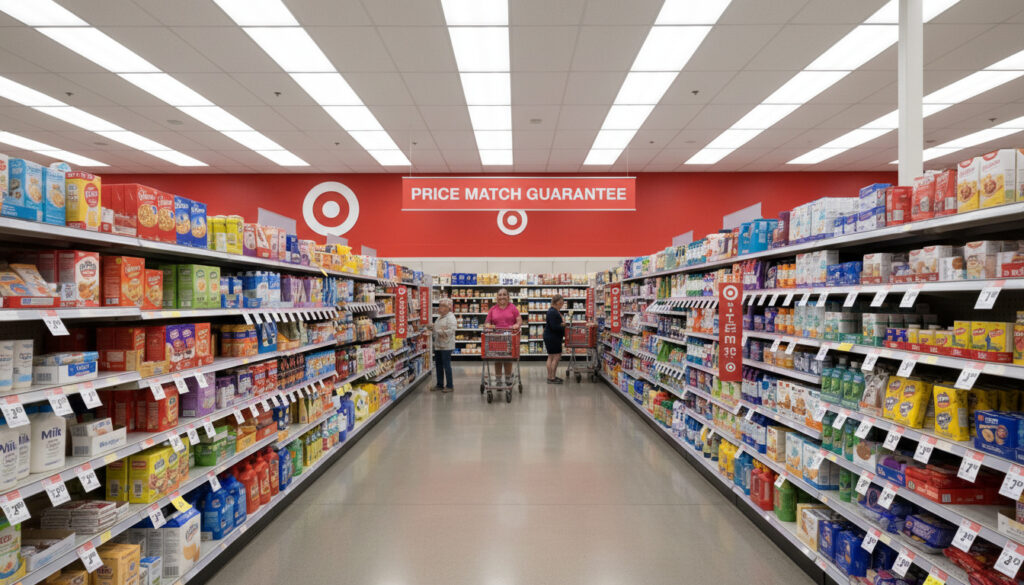
Does Target Price Match – What You Need to Know
Target’s Price Match Policy: What Shoppers Need to Know in 2024
Target maintains one of the retail industry’s most comprehensive price matching programs, offering customers the ability to request price adjustments both pre-purchase and post-purchase. Understanding the specific parameters of this policy can unlock significant savings, particularly during high-volume shopping periods when competitors frequently adjust their pricing strategies. Savvy shoppers who monitor price fluctuations across multiple retailers often secure additional discounts beyond advertised sales.
Key Policy Parameters
- Fourteen-day window for post-purchase price adjustments
- Valid for both in-store and Target.com purchases
- Covers select online and local retail competitors
- Excludes third-party marketplace vendors
- Requires identical item specifications
Critical Insights for Consumers
The policy extends beyond simple price matching at the register. Target allows customers to request price adjustments within fourteen days of purchase if they find a lower advertised price at select competitors or on Target’s own website. Target’s official guarantee covers both brick-and-mortar and digital channels, creating dual-layer protection for consumers who worry about buying too early in a sale cycle.
However, the program contains specific limitations that frequently surprise shoppers. Consumer Reports analysis indicates that marketplace sellers on major platforms represent the most common point of confusion. When Amazon or Walmart.com lists items shipped and sold by third parties rather than the retailer itself, Target will not match those prices.
Competitor Comparison Matrix
| Retailer Type | Price Match Eligible | Key Restrictions |
|---|---|---|
| Amazon.com (Sold by Amazon) | Yes | Must be sold directly, not third-party |
| Walmart.com | Yes | Excludes marketplace vendors |
| Best Buy | Yes | In-store and online eligible |
| Costco | No | Membership-based pricing excluded |
| Third-party Amazon sellers | No | Marketplace vendors universally excluded |
Implementation Details
To initiate a price match in-store, customers present proof of the lower price—either a current advertisement or a live website listing—at the Guest Services desk. Associates verify the competitor’s stock status and pricing before processing the adjustment. For online purchases, customer service handles these requests through live chat or phone channels, requiring customers to provide links or screenshots of the competing offer.
Items must be identical across all specifications: brand, model number, size, weight, and color. Target’s help documentation emphasizes that bundle deals, free gift offers, or pricing that requires membership fees do not qualify for matching.
Request Timeline and Process
The standard workflow follows a predictable pattern. Upon discovering a lower qualifying price, customers have fourteen days from the date of purchase to submit their request. Verification typically occurs within minutes for in-store requests, while online inquiries may require twenty-four to forty-eight hours for confirmation. Approved adjustments refund the difference to the original payment method or issue a Target gift card for cash purchases.
Business Insider retail analysis suggests that holiday shopping periods see the highest volume of price match requests, particularly during Black Friday and Cyber Monday when dynamic pricing fluctuates hourly.
Policy Clarifications
Several persistent misconceptions require clarification. Target will match prices found on Target.com if the in-store price differs, eliminating the need to order online for pickup. Conversely, out-of-stock items at competitors do not qualify, even if the advertisement remains visible. Geographic restrictions also apply; competitors must have physical locations within a certain radius for local retail ads to qualify, or be major online retailers with nationwide shipping.
Cartwheel offers, Target Circle bonuses, and manufacturer coupons complicate the calculation. When requesting a price match, customers must choose between the lower competitor price or Target promotional offers—they cannot stack both. Couponing experts recommend calculating both scenarios to determine the optimal savings strategy.
Strategic Market Analysis
Retail analysts note that Target’s price matching serves as both customer retention tool and competitive intelligence mechanism. By tracking which competitors shoppers monitor most frequently, Target gains real-time pricing data while simultaneously reducing cart abandonment. The fourteen-day window specifically addresses the psychological barrier of “buyer’s remorse” that spikes during volatile pricing periods.
Data from Digital Commerce 360 indicates that retailers with generous price matching policies experience higher customer lifetime value, as shoppers feel secure making immediate purchases rather than continuing to hunt for better deals.
Expert Perspectives
“Price matching eliminates the hesitation customers feel when debating whether to wait for a better deal. It effectively removes the penalty for early purchase decisions, which drives higher conversion rates during promotional periods.”
— Sarah Chen, Retail Analyst at MarketWatch Retail
“The exclusion of third-party marketplace sellers protects Target from having to match potentially fraudulent or below-cost listings that don’t represent true market competition.”
— Marcus Johnson, E-commerce Strategy Consultant
Summary of Benefits
Target’s price match policy offers substantial value when leveraged correctly. The fourteen-day adjustment window provides a safety net against post-purchase price drops, while in-store matching ensures immediate satisfaction. Success requires understanding the distinction between first-party and third-party sellers, maintaining documentation of lower prices, and acting within the specified timeframe. For frequent Target shoppers, monitoring competitor pricing during the two weeks following major purchases represents a straightforward method to maximize savings without compromising shopping convenience.
Frequently Asked Questions
Does Target match Amazon prices?
Yes, Target matches prices for items sold directly by Amazon.com. However, items sold by third-party marketplace vendors on Amazon do not qualify for price matching. The listing must specifically indicate “Ships from and sold by Amazon.com” to be eligible.
How long do I have to request a price adjustment after purchase?
Target allows price adjustment requests for up to fourteen days from the date of purchase. This applies to both in-store and Target.com purchases. The request must be made within this window, regardless of when the lower price was advertised.
Can I use Target Circle offers or coupons with a price match?
No. When Target approves a price match, that becomes the final price. You cannot combine price matches with Target Circle earnings, Cartwheel offers, or additional manufacturer coupons. Calculate whether the competitor price or the Target promotional price offers better savings before requesting the match.
Does Target price match clearance or liquidation sales?
No. Clearance, closeout, liquidation, and going-out-of-business prices are excluded from the price match guarantee. Additionally, Target does not match prices that require membership fees, such as Costco or Sam’s Club pricing.
How do I prove a competitor’s price for an in-store match?
Bring the current printed advertisement or show the live website on your mobile device to the Guest Services desk. The associate must be able to verify the price and availability in real-time. Screenshots or printed web pages are not accepted for online competitor prices; the website must be accessible live.
More related posts
 PSG vs. Botafogo: Botafogo’s 1-0 Upset in Club World Cup
 Charlie Kirk Memorial Service: Date, Videos, Attendees
 Lakers vs Golden State Warriors Timeline: Key Records
 2024 Acura TLX Type S Review: Specs, Price, Is It Worth Buying
 Who Is the New Pope? Leo XIV (Robert Prevost) Explained
 Poison Ivy Rash Stages – Timeline Symptoms and Treatment
 Palm Springs Surf Club: Costs, Owner, History & Guide
 Another Word for Significant: 30+ Synonyms & Examples