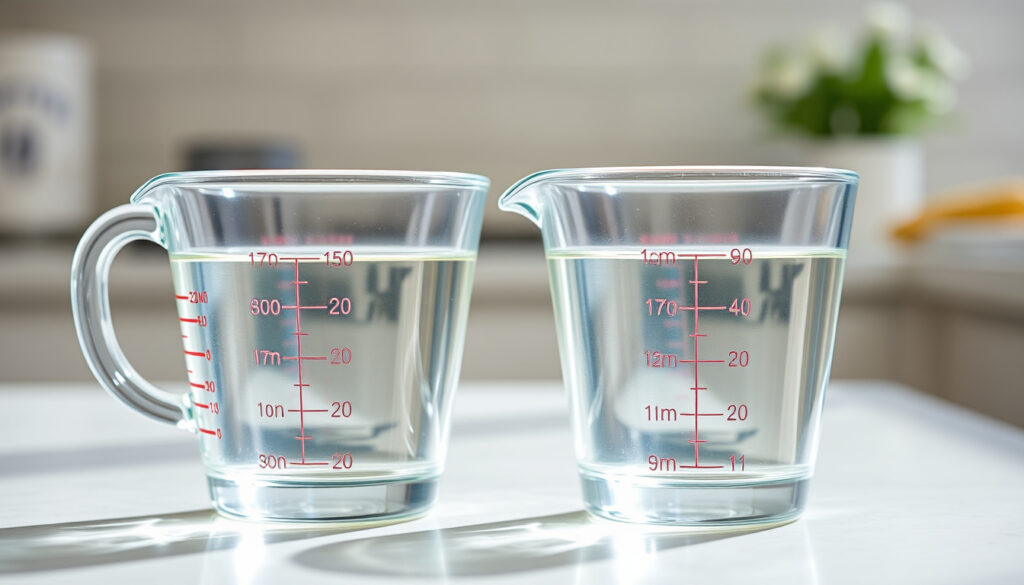
2 Oz to Ml – Precise US and UK Conversions
Converting 2 ounces to milliliters requires understanding whether you’re working with US customary fluid ounces or UK imperial fluid ounces. The distinction matters because the two systems use different base definitions, resulting in different conversion values. This guide provides precise conversion factors, explains the underlying formulas, and addresses common approximations used in cooking, medicine, and everyday measurements.
The metric system, which uses milliliters as a unit of volume, has become the global standard for scientific, medical, and most international applications. In the United States, however, fluid ounces remain common in recipes, beverage labels, and consumer products. Bridging these two measurement systems requires accurate conversion factors rooted in internationally recognized standards.
How Many mL is 2 oz?
Two US fluid ounces equals exactly 59.147059125 milliliters, while two UK imperial fluid ounces equals exactly 56.826125 milliliters. The US fluid ounce is defined as 1/128 of a US gallon, which is legally defined as 3.785411784 liters. The UK imperial fluid ounce is defined as 1/160 of an imperial gallon, which equals 4.54609 liters.
- Multiply US fluid ounces by 29.5735 to get milliliters
- Multiply UK imperial fluid ounces by 28.4131 to get milliliters
- The US fluid ounce is approximately 4% larger than the UK imperial fluid ounce
- Confusing the two systems leads to errors exceeding 2.3 mL per ounce
- The approximation of 60 mL for 2 oz overstates the true value by about 1.4%
- For water at standard conditions, 1 mL weighs approximately 1 gram
| Volume | US fl oz (mL) | Imperial oz (mL) | Approximate |
|---|---|---|---|
| 1 oz | 29.5735 | 28.4131 | 30 mL |
| 2 oz | 59.1471 | 56.8261 | 60 mL |
| 4 oz | 118.294 | 113.652 | 120 mL |
| 8 oz | 236.588 | 227.305 | 240 mL |
| 16 oz | 473.177 | 454.609 | 480 mL |
How to Convert oz to mL: Formula and Calculator
The conversion formula relies on the precise definition of each fluid ounce type. For US fluid ounces, multiply the volume in ounces by 29.5735295625 to obtain milliliters. For UK imperial fluid ounces, multiply by 28.4130625. These values derive from internationally recognized standards maintained by the National Institute of Standards and Technology and the International Bureau of Weights and Measures.
US Fluid Ounce Conversion Formula
To convert US fluid ounces to milliliters, apply the following calculation:
Volume (mL) = Volume (US fl oz) × 29.5735295625
For example, converting 2 US fluid ounces: 2 × 29.5735295625 = 59.147059125 mL, which is typically rounded to 59.1471 mL or 59.15 mL for practical applications.
UK Imperial Ounce Conversion Formula
To convert UK imperial fluid ounces to milliliters:
Volume (mL) = Volume (Imperial fl oz) × 28.4130625
Converting 2 imperial fluid ounces yields: 2 × 28.4130625 = 56.826125 mL, commonly listed as 56.8261 mL.
Using the full-precision values (29.5735295625 and 28.4130625) ensures accuracy for scientific and medical applications. Rounded values like 29.57 or 28.41 introduce small errors that accumulate in larger volumes.
Is 2 oz Exactly 60 mL? Approximations Explained
No, 2 ounces is not exactly 60 milliliters. The common approximation of 60 mL for 2 oz overstates the true value by approximately 1.4%. When using 60 mL instead of the precise 59.147 mL, the error amounts to roughly 0.85 mL per US fluid ounce converted.
Why the 60 mL Approximation Exists
The approximation of 30 mL per ounce (or 60 mL for 2 oz) emerged from convenience rather than precision. Rounding to 30 simplifies mental math and works reasonably well for rough measurements in non-critical applications. Recipe developers often use rounded values because small variations rarely affect the final outcome of most dishes.
When Precision Matters
Baking presents the clearest case where approximation introduces problems. Chemical reactions in baked goods depend on precise ratios of ingredients. Substituting 60 mL where 59.15 mL is required alters the balance, potentially affecting texture, rise, and moisture content. Professional bakers and recipe developers typically insist on exact measurements.
Use exact conversions for baking, medicine dosing, and laboratory work. For general cooking, the 60 mL approximation rarely causes noticeable problems, but keeping the actual value in mind helps when adjusting recipes.
US Fluid oz vs. Imperial oz: Key Differences for mL Conversion
The difference between US and UK fluid ounces stems from divergent historical definitions of the gallon. The US retained its pre-1824 wine gallon of 231 cubic inches, while the UK standardized on the imperial gallon defined in 1824 as containing 10 pounds of water. This historical split created the approximately 4% size difference observed today.
Historical Origins
In 1824, the British Weights and Measures Act established the imperial gallon at 4.54609 liters, making each imperial fluid ounce exactly 28.4131 mL. The United States had already defined its gallon as 231 cubic inches, which equals approximately 3.785 liters. This produced a US fluid ounce of approximately 29.5735 mL. Both systems received precise metric definitions during the 1980s to ensure international consistency.
Practical Impact of the Difference
Confusing US and UK fluid ounces leads to measurable errors. Eight US ounces equal 236.59 mL, while eight UK ounces equal only 227.30 mL—a difference of 9.29 mL. For a 12-ounce soda can, the US version contains 355 mL while a UK “12 oz” would contain only 341 mL. These discrepancies matter when following international recipes or comparing nutritional information across borders.
Assuming a single conversion factor applies universally leads to consistent mistakes. Always verify which ounce type your recipe, product, or context requires before converting.
2 oz to mL in Recipes and Everyday Use
Recipes originating in the United States typically use US customary measurements, meaning 2 fluid ounces equals approximately 59.15 mL. Recipes from the UK, Canada, Australia, and other Commonwealth countries use imperial measurements, making 2 fluid ounces equal to 56.83 mL. International recipes may specify measurements differently, requiring careful attention to the measurement system indicated.
Cooking Applications
Many modern recipes, particularly those found online, have been adapted for international audiences and may use either system. When converting recipes, note that US and UK cup sizes also differ—US cups hold 236.6 mL while UK imperial cups hold 284.1 mL. This compounds conversion errors if not addressed systematically.
Converting 2 oz to mL becomes relevant when scaling recipes up or down. A recipe calling for 2 ounces of an ingredient requires approximately 59 mL for US measurements or 57 mL for UK/imperial measurements. Online conversion tools and specialized calculators simplify these calculations for home cooks. For additional conversion resources, explore related conversion guides that cover various measurement systems.
Medical and Pharmaceutical Contexts
Medical dosing rarely uses fluid ounces directly, but understanding volume relationships matters when interpreting labels or instructions from different countries. US pharmaceutical labels typically use milliliters or teaspoons, while some international products still reference fluid ounces. Medical conversion standards emphasize precision to prevent dosing errors.
For pediatric medications especially, using the exact conversion values prevents accidental underdosing or overdosing. Healthcare professionals rely on calibrated measuring devices marked in milliliters, reducing reliance on household measurements that may vary in accuracy.
When and Why Convert 2 oz to mL
The metric system’s global dominance makes milliliter conversions essential for international commerce, scientific research, and recipe adaptation. Products manufactured for global markets list volumes in milliliters, requiring conversion knowledge when comparing to US customary measurements. Understanding these conversions facilitates communication across measurement systems.
Laboratory work demands particular precision because chemical reactions depend on exact volumes. Scientists publishing research internationally must express volumes in metric units, necessitating conversion from any volume measurements taken in customary units. The National Institute of Standards and Technology provides detailed guidelines for unit conversions in technical contexts.
Food and beverage packaging varies by market. A 330 mL soda can contains approximately 11.16 US fluid ounces, while a 12 US ounce can holds 355 mL. Comparing prices or nutritional content across different-sized packages requires converting between systems. International travelers encounter these differences regularly when purchasing beverages or food products abroad.
Exact vs. Approximate: 2 oz to mL Clarity
Established Information
- 2 US fluid ounces = 59.147059125 mL (exactly)
- 2 UK imperial fluid ounces = 56.826125 mL (exactly)
- US fl oz = 29.5735295625 mL
- UK fl oz = 28.4130625 mL
- US system defines gallon as 3.785411784 L
- UK system defines gallon as 4.54609 L
Context-Dependent Factors
- Which ounce type applies depends on recipe or product origin
- Local labeling practices vary by country
- Household measuring cups may not match stated precision
- Temperature affects liquid volume slightly
- Non-water liquids may have different density conversions
Sources and Standards
Conversion factors for fluid ounces to milliliters derive from legally binding definitions maintained by national and international standards organizations. The National Institute of Standards and Technology defines US customary units in metric terms, ensuring traceability to the International System of Units.
The US fluid ounce is defined as 1/128 of a US gallon, where the gallon equals exactly 3.785411784 liters. The UK imperial fluid ounce equals 1/160 of an imperial gallon, which is exactly 4.54609 liters.
The International Bureau of Weights and Measures coordinates global measurement standards, including the metric definitions used to express customary units numerically. These standards underwent metric redefinition during the 1980s to improve precision and ensure international consistency.
Summary
Converting 2 ounces to milliliters requires knowing which fluid ounce system applies. Two US fluid ounces equals 59.147 mL, while two UK imperial fluid ounces equals 56.826 mL. The common approximation of 60 mL overstates the true US value by approximately 1.4%, which matters for baking, medicine, and other precision applications. Using the exact conversion factors from internationally recognized standards ensures accurate results across contexts.
Frequently Asked Questions
Why is 2 oz not exactly 60 mL?
Two US fluid ounces equals 59.147 mL, not exactly 60 mL. The approximation of 60 mL arose for convenience but overstates the true value by about 1.4%. Using 60 mL introduces a small error that accumulates in larger volumes.
Can I round 2 oz to 60 mL in recipes?
For most cooking applications, using 60 mL instead of 59.15 mL produces acceptable results. However, precision-sensitive recipes like baked goods may be affected. Professional and scientific contexts always require exact values.
What if the measurement refers to weight ounces, not fluid ounces?
Fluid ounces measure volume while weight ounces (avoirdupois) measure mass. They are not interchangeable. Converting weight ounces requires knowing the density of the substance. Only fluid ounces convert directly to milliliters using the factors discussed here.
How do I convert ounces to milliliters for UK recipes?
For UK imperial recipes, multiply the fluid ounce value by 28.4131 to get milliliters. Two UK fluid ounces equals 56.826 mL. Note that UK cup sizes also differ from US measurements, so consider the entire recipe’s measurement system when converting.
What is 1 oz in mL?
One US fluid ounce equals 29.5735 mL. One UK imperial fluid ounce equals 28.4131 mL. Always verify which system applies to your specific measurement before converting.
Is the US fluid ounce the same as the imperial fluid ounce?
No. The US fluid ounce is approximately 4% larger than the UK imperial fluid ounce (29.57 mL vs. 28.41 mL). This difference originated from separate gallon definitions and persists in measurement systems today.
How many milliliters are in 2 ounces of water?
Two US fluid ounces of water equals approximately 59.15 mL and weighs about 59.15 grams at standard temperature and pressure. This close correspondence exists because water’s density is approximately 1 gram per milliliter under normal conditions.
More related posts
 Michigan vs Ohio State 2025: Player Stats & Game Recap
 Where to Watch Wicked: Prime vs Netflix vs Peacock
 Conclave (2024 film): Catholic stance, controversy & review
 PEX A vs PEX B: Which Plumbing Tubing Should You Use
 Joke of the Day: Short, Hilarious Jokes for Everyone
 Is Vitamin Water Good for You? 2025 Pros, Cons, Health Facts
 Smiling Friends Season 3: Release Date, Finale & Where to Watch