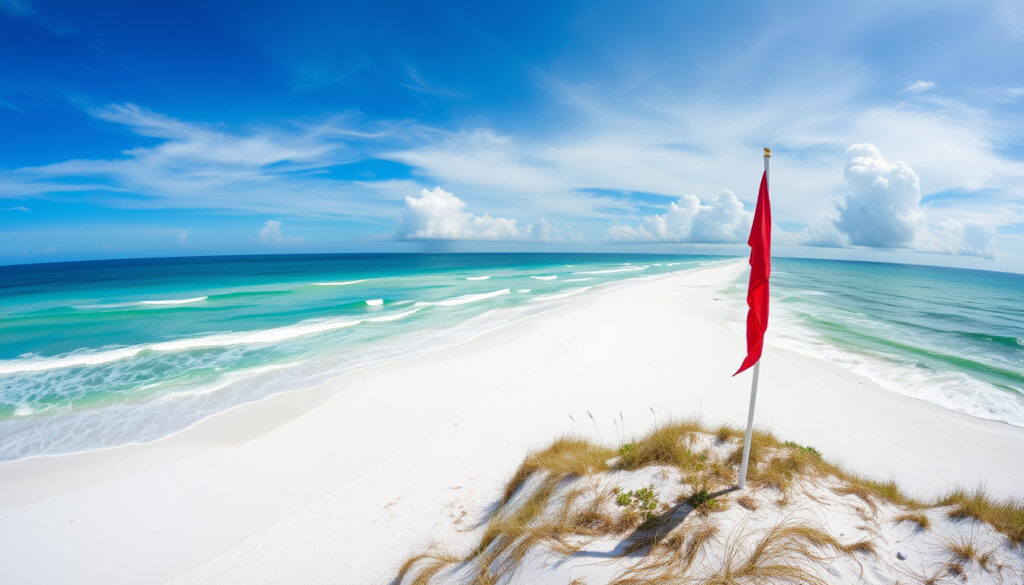
Panama City Beach Weather: Best Times, Forecast & Safety Guide
Anyone who’s checked a forecast before a beach trip knows the feeling: the numbers look good, but what about the water temperature? Or the safety flags? Panama City Beach draws millions of visitors each year with its sugar-white sands and emerald Gulf waters, but the weather here — from humid summers to mild winters — dictates the best time to go. This guide connects the dots between seasonal averages, swimming conditions, beach warning flags, and cost patterns so you can plan with confidence.
Average High Temperature (Summer): 89°F (32°C) Blue Swell ·
Average Low Temperature (Winter): 54°F (12°C) Panhandle Getaways ·
Annual Rainfall: 60 inches (152 cm) Panhandle Getaways ·
Peak Tourist Season: March to August Visit Panama City Beach ·
Water Temperature (Summer): 85°F (29°C) Blue Swell
Quick snapshot
- Average temperatures by month range from 61°F in January to 90°F in July (Blue Swell)
- Rainfall peaks in July and August at 7–8 inches per month (Panhandle Getaways)
- Hurricane season runs June through November (itslitpcb)
- Water temperature ranges from 60°F in winter to 85°F in summer (Blue Swell)
- Comfortable swimming conditions from April to October (Visit Panama City Beach)
- Rip currents are a year-round risk, especially at red-flag conditions (City of Panama City Beach)
- Color-coded flag system: green (low hazard), yellow (medium), red (high), double red (water closed) (City of Panama City Beach)
- Purple flag warns of dangerous marine life (City of Panama City Beach)
- Text alerts available by texting PCBFLAGS to 888777 (City of Panama City Beach)
- Best weather: March to May and October to November (Blue Swell)
- Cheapest months: January and February, up to 50% lower rates (itslitpcb)
- Largest crowds: June through August (Visit Panama City Beach)
Six key figures, one pattern: Panama City Beach delivers a near-perfect balance of warm Gulf waters and moderate winters, but rainfall and crowds shift drastically with the season.
The table below distills the annual averages into actionable numbers for trip planning.
| Label | Value |
|---|---|
| Average Annual Temperature | 70°F (21°C) |
| Hottest Month | July (avg high 90°F / 32°C) |
| Coldest Month | January (avg high 61°F / 16°C) |
| Average Annual Rainfall | 60 inches |
| Water Temperature Range | 60°F to 85°F (15°C to 29°C) |
| Peak Tourist Season | March through August |
What is the weather like in Panama City Beach year round?
Panama City Beach sits in a humid subtropical climate zone, which means hot, humid summers and mild, short winters. The Gulf of Mexico moderates temperatures, keeping winter lows rarely below freezing and summer highs often above 90°F. The pattern: expect warmth, but prepare for seasonal extremes in rainfall and crowd density.
What is the coldest month?
January is the coldest month, with an average high of 61°F (16°C) and lows around 44°F (7°C) according to Panhandle Getaways (local vacation rental guide). Freezing temperatures are rare, but a jacket is useful for evening walks.
What is the rainy season?
- Rainfall is distributed year-round but peaks in July and August, with each month averaging 7–8 inches (Blue Swell seasonal guide).
- June through September bring frequent afternoon thunderstorms, often brief but heavy (Panhandle Getaways).
What is hurricane season?
The Atlantic hurricane season officially runs from June 1 to November 30. Panama City Beach is vulnerable to storms, though direct hits are not annual. Travelers should monitor itslitpcb (local visitor resource) for seasonal alerts.
What is the best month to visit Panama City Beach?
The answer depends on what you want: warm weather without the crowds, or the liveliest beach scene at peak heat. The sweet spot for most visitors is spring (March–May) or fall (October–November). The pattern: compromise on either temperature or crowd level — rarely both.
When not to go to Panama City Beach?
The busiest and most expensive period runs from mid-March through August. Spring break (March–April) brings crowds and higher prices. Summer (June–August) is peak season with full hotels and heavy traffic. Winter (December–February) is quiet but cool.
What is the peak season?
Peak tourism runs from March to August, driven by spring break, family vacations, and warm Gulf waters. Visit Panama City Beach (official tourism site) notes that reservations book months in advance for these months.
The trade-off: June and July offer the best swimming temperatures but also the highest prices and thickest crowds. October gives you mild weather, lower rates, and the start of fall discounts.
Peak season pricing can double winter rates. The best weather months — April, May, October — offer the most value per dollar spent.
Is it warm enough to swim in Panama City Beach?
Yes, for a good chunk of the year. The Gulf of Mexico reaches comfortable swimming temperatures from April through October. The pattern: a seven-month window of swim-friendly water, bookended by cooler months best suited for wetsuits or beach walks.
What is the water temperature in Panama City Beach?
Water temperatures range from a winter low of 60°F (15°C) in January and February to a summer high of 85°F (29°C) in July and August, according to Blue Swell (local weather guide). By late May the water is typically above 75°F.
When can you swim?
- Comfortable swimming: April through October (water 70°F+)
- Pleasant but brisk: March and November (water 65–70°F)
- Too cold for most: December through February (water below 65°F)
Even in summer, rip currents are a hazard. The City of Panama City Beach (official government site) warns that yellow and red flags indicate moderate to high surf conditions that can sweep even strong swimmers offshore.
Warm water doesn’t mean safe water. Red and double red flags close the water to swimming — always check the flag before entering.
Is it safe to go to Panama City Beach right now?
Safety on Panama City Beach comes down to three things: the flag system, local alcohol rules, and awareness of wildlife. The pattern: official systems exist, but personal vigilance remains the last line of defense.
Panama City Beach Flag Warning System – West End PCB
The city follows the International Life Saving Federation’s color-coded flag system, as detailed by the City of Panama City Beach (municipal government). Each flag communicates the current surf condition:
- Green flag – Low hazard, calm conditions (caution still advised)
- Yellow flag – Medium hazard, moderate surf and/or currents
- Red flag – High hazard, high surf and/or strong currents
- Double red flag – Water closed to public; entering may lead to arrest (Visit Panama City Beach)
- Purple flag – Dangerous marine life (jellyfish, stingrays) (Holiday Inn Resort PCB)
Text alerts for current flag conditions are available by texting PCBFLAGS to 888777 (City of Panama City Beach).
What month can you not drink on the beach?
March and June are the months when alcohol is banned on Panama City Beach. The ban applies to the entire beachfront and is enforced by the city. Check the Visit Panama City Beach (official tourism site) for exact dates.
Are there gators in Panama City Beach?
Alligators are occasionally spotted in freshwater ponds and canals near the beach, but they are not a typical concern on the Gulf shoreline itself. The West End PCB (local guide) advises keeping a safe distance from any freshwater bodies.
The flag system is enforced daily. Ignoring a double red flag can result in fines or arrest — and worse, it puts your life at risk.
Why is Panama City Beach so cheap?
Compared to other Florida beach towns like Destin or Miami Beach, Panama City Beach offers surprisingly affordable stays — especially outside peak season. The pattern: abundant supply and seasonal demand drops create a buyer’s market for savvy travelers.
Is Panama City Beach affordable?
Yes. itslitpcb (local visitor blog) reports that winter rates can be up to 50% lower than summer rates. A large inventory of condos and rental properties creates competition that keeps prices down.
Why are hotels cheap?
- Massive supply of condos, hotels, and vacation rentals along 27 miles of beachfront
- Off-season demand drops sharply after Labor Day and again after spring break
- Many properties offer deep discounts to fill rooms from November through February
The implication: if you can travel outside March–August, you’ll get better weather (spring and fall are lovely) and pay significantly less.
Pros
- Mild winters (rarely below freezing)
- Warm Gulf water April–October
- Low winter rates (up to 50% off)
- Official flag warning system
- No state income tax savings for longer stays
Cons
- Summer heat and humidity can be intense
- Peak season crowds and traffic
- Rainy afternoons June–September
- Spring break alcohol bans in March and June
- Hurricane risk June–November
What we know vs. what’s still unclear
Confirmed facts
- January is the coldest month (avg high 61°F) (Panhandle Getaways)
- July is the hottest month (avg high 90°F) (Blue Swell)
- Flag warning system is official and uniform (City of Panama City Beach)
- Alcohol banned on beaches during March and June (Visit Panama City Beach)
- Water temperature ranges from 60°F to 85°F (Blue Swell)
What’s unclear
- Exact best month depends on individual preferences (crowd tolerance vs. budget vs. temperature)
- Water temperature can vary year to year by 2–4°F
- Hurricane impacts are unpredictable from season to season
What local authorities say
“The city uses International Life Saving Federation beach flag warning definitions to communicate surf and water hazards to the public.”
— City of Panama City Beach (municipal government)
“During double red flag conditions, the water is closed to the public and entering may lead to arrest.”
— Visit Panama City Beach (official tourism site)
For travelers heading to Panama City Beach, the decision hinges on which trade-offs you’re comfortable with. Summer gives you the warmest water but the highest prices, biggest crowds, and afternoon thunderstorms. Spring and fall offer mild weather, lower rates, and fewer people. Winter is the cheapest, but swimming requires a wetsuit. Value-conscious families should book for late April–May or October–November, and always check the flag before entering the water.
gulfcrestcondominiums.com, shellislandshuttle.com, seaflchange.org, pcbfl.gov, itslitpcb.com, facebook.com
Frequently asked questions
What is the 10-day weather forecast for Panama City Beach?
The 10-day forecast is available from the National Weather Service and major weather apps. For current beach conditions, text PCBFLAGS to 888777.
Does Panama City Beach experience hurricanes?
Yes. Hurricane season runs June 1–November 30. Direct hits are not annual, but tropical storms and heavy rain are possible. Monitor local alerts if traveling during this window.
What is the water temperature in July?
Water temperature in July averages 85°F (29°C), making it ideal for swimming (Blue Swell).
What do the beach flag colors mean?
Green = low hazard; yellow = medium hazard; red = high hazard; double red = water closed; purple = dangerous marine life (City of Panama City Beach).
When is spring break in Panama City Beach?
Spring break typically runs from early March through mid-April. Alcohol is banned on the beach during March (and also in June).
Is it safe to swim in the Gulf of Mexico?
Yes, but always check the beach flag. Rip currents are a year-round risk. Swim near a lifeguard if possible.
What is the cheapest month to visit?
January and February offer the lowest rates, often 50% below summer prices (itslitpcb).
More related posts
 Who Is the New Pope? Leo XIV (Robert Prevost) Explained
 Where Is the Pancreas Located? Anatomy, Pain, and Early Signs
 Sabrina Carpenter Album Cover: Controversy, Meaning & Backlash
 Conrad the Summer I Turned Pretty – Character Guide and Backstory
 23 cm to Inches: Exact 9.055, Formula, Chart & Shoe Size
 Elaine Hendrix Movies and TV Shows: Complete Filmography
 Haunted Annabelle Doll Missing? The Truth Behind 2025 Rumors
 How to Cancel Audible Membership: Step-by-Step Guide (2025)