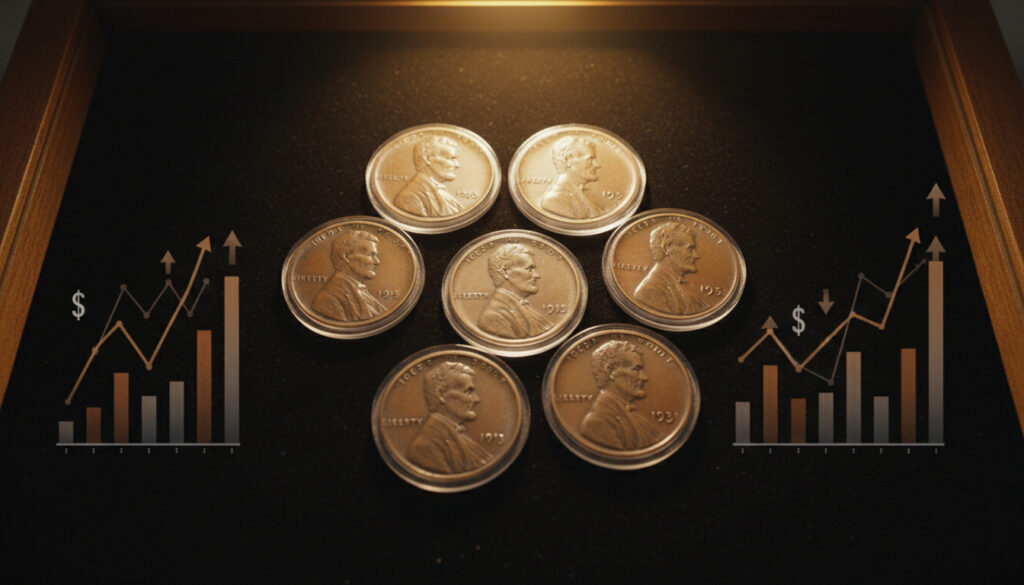
Lincoln Wheat Penny Value – Key Dates and Prices
Lincoln Wheat Pennies, struck from 1909 to 1958, represent one of the most collected series in American numismatics. While most circulated examples trade for nominal sums, specific dates and varieties command premiums ranging from hundreds to over $100,000 at auction. Distinguishing common currency from numismatic treasure requires careful examination of mintage figures, condition grades, and minting anomalies.
The series commemorates the centennial of Abraham Lincoln’s birth, featuring Victor David Brenner’s iconic wheat stalk reverse. Values fluctuate based on professional grading standards, with authentication from PCGS or NGC often multiplying market prices significantly. 1 Dollar in Rupees Today – Live USD to INR Exchange Rate demonstrates how collectible markets parallel currency valuation dynamics.
How Much Is a Lincoln Wheat Penny Worth?
Mintage Span
1909–1958
Composition
95% copper (Steel in 1943)
Scarcity Drivers
1909-S VDB, 1914-D, 1931-S
Common Range
$0.10–$5 circulated
Key Market Insights:
- Condition drives exponential value increases; MS-65 specimens can command 1,000 times more than worn examples.
- San Francisco mint marks typically carry premiums due to lower production volumes.
- The 1909-S VDB represents the series pinnacle, with MS-65 Red specimens regularly exceeding $100,000.
- Steel cents from 1943 trade near face value, but 1943 copper errors exceed $100,000 when authenticated.
- Professional grading increases liquidity and market confidence, particularly for key dates.
- Color designation critically affects pricing; Red (RD) specimens significantly outperform Brown (BN) counterparts.
- Market analysis indicates key dates appreciating 5–10% annually, while common dates remain stable.
| Date/Mint | Mintage | Good | Fine | MS-60+ | MS-65 RD |
|---|---|---|---|---|---|
| 1909-S VDB | ~484,000 | $400–650 | $500–800 | $10,000+ | $100,000+ |
| 1914-D | 1,193,000 | $200–250 | $300–450 | $10,000+ | $50,000+ |
| 1931-S | 866,000 | $60–80 | $100+ | $1,500+ | $15,000+ |
| 1909-S | 1,800,000 | $100–120 | $130–150 | $1,000+ | $8,000+ |
| 1922 No D | Error | $300+ | $500+ | $5,000+ | $25,000+ |
| 1955 Doubled Die | Error | $1,000+ | $2,000+ | $10,000+ | $20,000+ |
Which Years and Varieties of Wheat Pennies Are Most Valuable?
Scarcity within the Lincoln Wheat series stems primarily from mintage figures rather than survival rates alone. Numismatic research identifies three universally recognized key dates that command substantial premiums across all grades.
The Pinnacle Key Dates
The 1909-S VDB represents the ultimate prize, with a mintage of approximately 484,000 pieces bearing the designer’s initials. These coins circulate rarely in high grades, making uncirculated specimens extraordinarily valuable. The 1914-D, with only 1,193,000 struck at the Denver Mint, suffers from weak strikes and heavy circulation, rendering true uncirculated examples exceptionally rare. The 1931-S, produced during the Great Depression with just 866,000 minted, remains the only 1930s date commanding significant premiums even in heavily worn condition.
Semi-Key Varieties
Intermediate collectors often target semi-key dates offering scarcity at accessible price points. These include the 1910-S, 1911-S, 1912-S, 1914-S, and 1926-S, typically trading between $25 and $500 depending on grade. Specialized guides note that the 1924-D frequently exhibits weak strikes, requiring careful examination for full detail when purchasing higher-grade examples.
Semi-key dates provide strong value potential for building complete sets affordably. While lacking the extreme premiums of the 1909-S VDB, specimens like the 1912-S and 1926-S offer genuine scarcity documented by population reports, typically trading at fractions of the big three keys.
How Do I Determine the Value of My Wheat Penny?
Decoding Mint Marks and Production
Mint marks appear below the date on the obverse: no mark indicates Philadelphia, D denotes Denver, and S signifies San Francisco. Rarity derives from original mintage rather than current survival estimates. For instance, the 1931-S remains scarcer than the higher-mintage 1931-D despite similar survival speculation. Comprehensive valuation resources emphasize verifying mint marks under magnification, as wear can obscure small details.
Grading Standards and Color Designations
Professional grading services utilize the Sheldon Scale from Poor-1 to Mint State-70. For copper coins, color designations significantly impact value: Red (RD) requires 95% original mint luster, Red-Brown (RB) shows 5-95% red, and Brown (BN) exhibits less than 5% red. Early dates in RD condition command substantial premiums over BN examples. Authentication from established grading services provides standardized condition assessment essential for accurate valuation.
For potential key dates or error varieties, professional authentication is essential. Counterfeit 1909-S VDB and 1943 copper cents flood the market. Third-party grading provides standardized assessment of authenticity and condition, protecting buyers and sellers alike.
Never clean wheat pennies. Abrasive cleaning destroys original surfaces and reduces value by 50% or more. Toning and original patina are preferred by collectors and professional graders; attempts to improve appearance typically result in “damaged” designations that destroy numismatic value.
Red designation indicates full original mint color remaining. Premiums increase exponentially at the RD level, particularly for early dates like 1909-1915. Even slight toning shifts classification to RB or BN, substantially affecting market pricing.
Are Wheat Pennies Made of Silver and Other Common Myths?
Contrary to popular misconception, no Lincoln Wheat Pennies contain silver. The standard composition consists of 95% copper alloyed with 5% tin and zinc, producing the characteristic reddish-brown tone. The only composition change occurred in 1943, when wartime copper shortages forced the Mint to strike steel-plated zinc cents weighing 2.7 grams versus the standard 3.11 grams. For those interested in currency exchange, the live rate for US dollars to pounds can be found at $US dollars to pounds live rate.
The 1943 copper penny myth contains partial truth. Approximately 20 bronze planchets from 1942 remained in presses and were struck with 1943 dies, creating one of numismatics’ most valuable errors. However, the vast majority of 1943 cents are common steel issues worth minimal premiums. Conversely, 1944 saw rare steel planchet errors when leftover steel discs were accidentally used. 1 Dollar in Rupees Today – Live Rate and Analysis illustrates how rare anomalies in currency systems create extraordinary value divergences similar to these mint errors.
How Has the Lincoln Wheat Penny Series Evolved Over Time?
- : Series introduction featuring Victor David Brenner’s wheat stalk design and VDB initials on limited issues.
- : Denver Mint produces its lowest mintage at 1,193,000 pieces, creating a permanent key date.
- : Die polishing and clogging at Denver create the famous “No D” variety.
- : San Francisco strikes its final low-mintage wheat penny (866,000) before Depression-era production cuts.
- : Wartime steel composition replaces copper; rare bronze errors struck inadvertently.
- : Return to copper alloy; occasional steel planchet errors occur from leftover discs.
- : Doubled die obverse created at Philadelphia, producing one of the century’s most famous error coins.
- : Final year of wheat reverse design.
What Facts Are Certain vs. Uncertain in Wheat Penny Valuation?
Established Information
- 1909-S VDB mintage of approximately 484,000 is documented in Mint records.
- 1943 copper cents are authenticated at fewer than 20 specimens known.
- PCGS and NGC grading standards dominate the certified coin market.
- Steel cents weigh 2.7g versus 3.11g for copper compositions.
- 1931-S represents the lowest San Francisco mintage of the series.
Information That Remains Unclear
- Exact uncirculated populations of 1914-D specimens remain estimates-based on survival speculation.
- Future price appreciation rates cannot be guaranteed despite historical trends.
- Unreported hoards of key dates may surface, potentially affecting supply dynamics.
- Specific auction prices fluctuate based on bidder competition and macroeconomic conditions. Market tracking sites document this volatility.
What Historical Context Shaped the Lincoln Wheat Penny?
The Lincoln Wheat Penny emerged from the 1909 centennial celebration of Abraham Lincoln’s birth, replacing the Indian Head design. President Theodore Roosevelt initiated the redesign to elevate American coinage artistry, selecting sculptor Victor David Brenner. The wheat stalks framing “ONE CENT” on the reverse symbolized agricultural prosperity.
Production fluctuations reflected American history. Depression-era economics created the 1931-S scarcity. World War II necessitated the 1943 steel composition change. The series concluded in 1958, replaced by the Lincoln Memorial reverse designed by Frank Gasparro to commemorate Lincoln’s sesquicentennial.
Where Does Wheat Penny Pricing Data Come From?
Values rise sharply with professional grading in higher grades like Extremely Fine, Mint State, or Proof, influenced by color and auction demand. Recent market analysis indicates keys appreciating 5–10% yearly on collector demand, while common dates remain stable.
— Gainesville Coins Market Analysis
Rarity is driven by mintage, not just survival. The 1931-S is scarcer than the higher-mintage 1931-D, demonstrating that original production numbers better predict value than estimated current populations.
— APMEX Numismatic Research
What Should Collectors Remember About Wheat Penny Values?
Successful wheat penny valuation requires distinguishing between common circulated specimens worth minimal premiums and key dates commanding significant sums. Authentication by recognized grading services remains essential for high-value transactions. Collectors should focus on original surfaces, appropriate color, and verified mint marks while avoiding cleaned or damaged pieces. The market rewards patience, knowledge, and careful examination over quick speculation.
Frequently Asked Questions
Where can I sell wheat pennies for fair market value?
Key dates and errors should be sold through Heritage Auctions or certified dealers. Common dates can be sold to local coin shops or online marketplaces, though prices typically remain near melt value for circulated specimens.
What is the single rarest wheat penny error?
The 1943 bronze cent represents the rarest regular issue, with fewer than 20 authenticated examples. These wartime errors occurred when copper planchets from 1942 remained in presses.
Why does the 1931-S command higher prices than the 1931-D despite close mintages?
Collector demand drives the 1931-S premium. While both have relatively low mintages, the San Francisco issue is specifically recognized as a key date in registry sets, creating concentrated demand that outstrips the more available Denver issue.
Does cleaning a wheat penny ever increase value?
Never. Cleaning destroys original surfaces and patina that graders value. Professional services immediately identify cleaned coins, typically assigning “details” grades that reduce value significantly compared to uncleaned equivalents.
What makes a 1943 penny valuable versus common?
Standard 1943 steel cents are common. Valuable 1943 cents are struck in bronze/copper, identifiable by weight (3.11g vs 2.7g) and color. All purported 1943 copper cents require professional authentication due to high counterfeit prevalence.
More related posts
 Memphis Grizzlies vs Sacramento Kings Match Player Stats
 Lion King 1994 Cast: Full Voice Actor List for Every Character
 Pain on Left Side of Stomach – Causes, Symptoms and When to See a Doctor
 2024 QB Draft Class: Analysis, Stats & Historical Context
 RuPaul’s Drag Race Season 17: Winner Onya Nurve & Guide
 Ruger 10/22: Banned, Discontinued, or Still the Best .22 Rifle
 Who Is the New Pope? Leo XIV (Robert Prevost) Explained
 Alone in the Dark PS5: Should You Play It in 2024