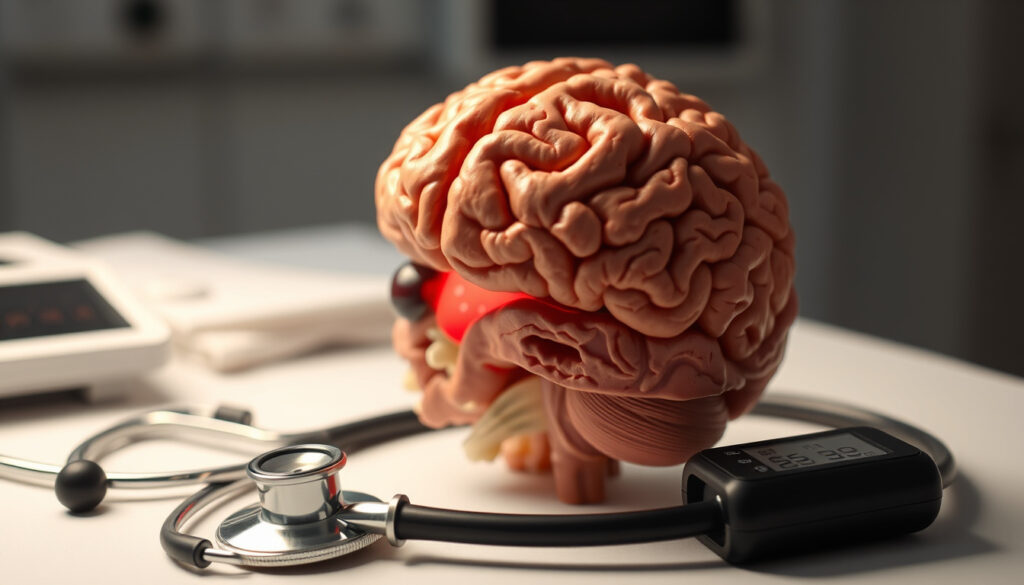
What Is a Stroke? Causes, Signs, and Prevention
You’re talking to someone and their face suddenly droops. They can’t lift their arm or repeat a simple sentence. That instant is called a stroke — and how you respond in the next few minutes can determine everything. Each year, about 795,000 people in the United States experience a stroke, according to the CDC. This guide breaks down what happens during a stroke, why it matters, and how to reduce your risk.
Annual strokes in the US: 795,000 ·
Global strokes per year: 15 million ·
Ischemic stroke percentage: 87% ·
Treatment window for ischemic stroke: 3-4.5 hours
Quick snapshot
- Stroke is a medical emergency requiring immediate treatment (NHS)
- Ischemic strokes are more common than hemorrhagic (Mayo Clinic)
- FAST signs are reliable indicators (NHS)
- Exact cause of silent strokes sometimes unknown
- Recovery outcomes vary widely by individual
- Treatment window for ischemic stroke is 3-4.5 hours (Mayo Clinic)
- Most natural recovery occurs within first 3 months (National Institute on Aging)
- Long-term risk factor management is key (National Institute on Aging)
- Emergency treatment with tPA and thrombectomy (Mayo Clinic)
- Rehabilitation and lifestyle changes for prevention (NHS)
Six key facts about strokes, one pattern: the faster you act, the better the outcome.
Here is a snapshot of the essential facts about strokes, from types to prevention.
| Fact | Details |
|---|---|
| Definition | Stroke occurs when blood supply to part of the brain is interrupted or reduced. |
| Main Types | Ischemic (blockage) and Hemorrhagic (bleeding) |
| Common Cause | High blood pressure |
| Primary Symptom Check | FAST: Face, Arms, Speech, Time |
| Recovery Timeline | Varies; peak recovery in first 3-6 months |
| Preventable Percentage | Up to 80% of strokes are preventable |
The implication: every fact points toward the same conclusion — early intervention and prevention are the two most powerful levers.
What exactly causes a stroke?
What are the types of stroke?
- Ischemic stroke — caused by a blocked artery in the brain (Mayo Clinic)
- Hemorrhagic stroke — caused by leaking or bursting of a blood vessel in the brain (Mayo Clinic)
Ischemic strokes account for about 87% of all cases, making them by far the most common type. Hemorrhagic strokes, though less frequent, are often more severe because the bleeding puts direct pressure on brain tissue (Mayo Clinic).
The implication: treatment depends entirely on which type has occurred. Clot-busting drugs that help an ischemic stroke can be deadly for a hemorrhagic one.
What are the causes of a stroke in a woman?
Women face unique stroke risks: pregnancy, menopause, and birth control pills can raise blood pressure and clotting risk. But the same core risk factors affect both sexes — and controlling them is the single most effective prevention strategy.
- High blood pressure — the most important risk factor to control (National Institute on Aging)
- Untreated diabetes damages blood vessels and narrows arteries (National Institute on Aging)
- Smoking dramatically raises stroke risk (National Institute on Aging)
- High cholesterol contributes to plaque buildup (National Institute on Aging)
The pattern: controlling these risk factors is the single most effective prevention strategy for everyone.
What are the 10 causes of a stroke?
While the exact list varies by individual, the leading causes map to a handful of underlying conditions and behaviors.
- High blood pressure
- Atrial fibrillation
- Diabetes
- Smoking
- High cholesterol
- Obesity
- Physical inactivity
- Poor diet (high salt, saturated fats)
- Excessive alcohol consumption
- Age and family history
Up to 80% of strokes are preventable through managing these factors, according to the Mayo Clinic.
What are 5 warning signs of a stroke?
What are the first signs of a stroke?
- Face drooping — one side of the face may be numb or unable to smile evenly (CDC)
- Arm weakness — one arm drifts downward when raising both arms (CDC)
- Speech difficulty — slurred speech or trouble repeating a simple sentence (CDC)
- Time — call emergency services immediately if any of these symptoms are present (NHS)
These four signs form the FAST mnemonic, a tool promoted by the NHS and the CDC. Other sudden symptoms include confusion, trouble seeing in one or both eyes, trouble walking, dizziness, and a severe headache with no known cause (CDC).
The pattern: stroke symptoms always appear suddenly. If they come and go over minutes, it could be a transient ischemic attack (TIA) — still a medical emergency.
What are the four silent signs of a stroke?
Silent strokes have no obvious symptoms, yet they still damage brain tissue. The Mayo Clinic notes that these mini-strokes often go unnoticed but increase the risk of a major stroke later. Common subtle signs include:
- Brief loss of balance
- Sudden vision changes that clear quickly
- Momentary confusion
- Unexplained dizziness
What this means: if you experience any of these, it’s worth discussing with a physician — they could be early warnings.
Where do you first feel a stroke?
A stroke doesn’t always cause pain. The NHS says the earliest sensations are usually weakness, numbness, or coordination loss on one side of the body — often felt in the face, arm, or leg. The key is that symptoms are unilateral (one side) and sudden.
What happens while a stroke?
How does a stroke affect the brain?
- Brain cells die rapidly due to lack of oxygen and nutrients (Mayo Clinic)
- Without treatment, about 1.9 million neurons are lost every minute
- The type and location of the blockage or bleed determine the specific symptoms (NHS)
During an ischemic stroke, a clot blocks blood flow, starving brain tissue of oxygen. In a hemorrhagic stroke, a burst artery floods the brain with blood, increasing pressure and damaging cells (Mayo Clinic). The National Institute on Aging explains that the faster blood flow is restored, the less permanent damage occurs.
The catch: every moment of delay steals function that may never fully return.
What happens after a stroke?
What are the 7 stages after a stroke?
- Stage 1 — Immediate medical care: Emergency treatment to stabilize the brain and restore blood flow (Mayo Clinic)
- Stage 2 — Stroke unit monitoring: 24-72 hours of observation in a specialized unit
- Stage 3 — Initial rehabilitation: Speech, physical, and occupational therapy often begins within a week (NHS)
- Stage 4 — Continued recovery: Most natural improvement occurs in the first three months (National Institute on Aging)
- Stage 5 — Plateau: Recovery rate slows after 3-6 months
- Stage 6 — Long-term management: Addressing risk factors to prevent a second stroke
- Stage 7 — Lifestyle adaptation: Adjusting to permanent changes in movement, speech, or cognition
Recovery timelines vary widely by individual, but the NHS stresses that rehabilitation is a marathon, not a sprint. Many survivors see improvement for years after the initial event.
How do I avoid getting a stroke?
How to prevent stroke?
- Control blood pressure — the single most effective step (National Institute on Aging)
- Manage cholesterol and treat atrial fibrillation (Mayo Clinic)
- Adopt a healthy diet low in salt and saturated fats, and exercise regularly (NHS)
- Avoid smoking and limit alcohol consumption (National Institute on Aging)
Beyond direct medical interventions, daily habits play a huge role. The Mayo Clinic highlights that maintaining a healthy weight, staying physically active, and eating a balanced diet rich in fruits and vegetables can cut stroke risk dramatically. Even small improvements — like walking 30 minutes a day — make a measurable difference.
The catch: prevention isn’t about a single magic bullet. It’s about stacking small, consistent choices over years.
Timeline of Stroke Care and Recovery
- 0-3 hours: Emergency treatment window for acute ischemic stroke (tPA) (Mayo Clinic)
- 24-72 hours: Hospital monitoring and stroke unit care (NHS)
- 1 week: Initial rehabilitation therapy begins (National Institute on Aging)
- 3 months: Most natural recovery occurs within first three months (National Institute on Aging)
- 6 months: Plateau in recovery; continued therapy may help (Mayo Clinic)
- 1 year and beyond: Long-term management of risk factors and lifestyle changes (NHS)
Why timing matters: the earlier treatment starts, the fewer brain cells are lost. Every minute without care means about 1.9 million neurons die — a loss that adds up fast.
Confirmed facts
- Stroke is a medical emergency requiring immediate treatment (NHS)
- Ischemic strokes are more common than hemorrhagic (Mayo Clinic)
- FAST signs are reliable indicators (CDC)
- Up to 80% of strokes are preventable (Mayo Clinic)
What’s unclear
- Exact cause of silent strokes sometimes unknown
- Recovery outcomes vary widely by individual
- Why some people recover faster than others with similar damage
A stroke is a medical emergency that happens when something prevents your brain from getting enough blood flow.
Each year, about 795,000 people in the United States have a stroke. About 87% of these are ischemic strokes.
— CDC
For patients and their families, the path forward demands immediate action at the first sign of trouble — and a commitment to prevention that doesn’t wait for a warning. Every minute matters, and every healthy choice compounds. The difference between a full recovery and a lifetime of disability often comes down to the first few seconds of recognition and the years of prevention that follow.
Related reading: **Lower Back Pain Causes: Common Causes, Red Flags, and Relief** · **Pancreas Location: Anatomy, Pain, and Early Signs**
ahajournals.org, springvalleyhospital.com, ahajournals.org, elder.org, heart.org, stroke.org.uk, ahajournals.org
Related coverage: what causes a stroke fördjupar bilden av What Causes a Stroke – Main Types, Risk Factors, and Prevention.
Frequently asked questions
What is a mini-stroke (TIA)?
A transient ischemic attack (TIA) is a temporary blockage of blood flow to the brain. Symptoms last only a few minutes and often resolve completely, but a TIA is a serious warning sign — about 1 in 3 people who have a TIA go on to have a full stroke within a year (NHS). Seek medical attention immediately if you suspect a TIA.
Can you recover completely from a stroke?
Some people recover fully, especially if treatment begins quickly and the stroke was small. However, many survivors face lasting changes in movement, speech, or cognition. The NHS notes that rehabilitation is crucial for maximizing recovery, and improvements can continue for years.
Is stroke genetic?
Family history can raise your risk, especially if a parent or sibling had a stroke at a young age. But genetics interact with lifestyle — controlling blood pressure, cholesterol, and smoking can dramatically reduce risk even in people with a family history (Mayo Clinic).
Can stress cause a stroke?
Chronic stress contributes to high blood pressure, which is the leading risk factor for stroke. Stress can also lead to unhealthy behaviors like smoking, overeating, or drinking too much alcohol. The National Institute on Aging recommends stress management as part of an overall prevention plan.
What should I do if I suspect someone is having a stroke?
Call emergency services immediately. Do not wait to see if symptoms improve. Note the time the symptoms started, as this information is critical for treatment decisions (NHS). Keep the person calm and lying on their side if possible.
How long does stroke recovery take?
The most dramatic recovery typically occurs in the first three to six months, but many people continue making gains for a year or more. The NHS emphasizes that recovery is highly individual and depends on the stroke’s location and severity, the patient’s age, and how quickly treatment began.
More related posts
 Life Path Number Calculator: Luckiest, Rarest & More
 What Time Does McDonald’s Serve Lunch? Hours Explained
 190 C to F: Convert 190°C to Fahrenheit for Oven Cooking
 LED Lights for Room: Guide to Choosing, Cost & Safety
 What Is No Kings Act – Schumer’s Challenge to Presidential Immunity
 How Long Does Mono Last? Recovery Timeline & Key Facts
 What Is a Secondary Source – Definition, Examples and Differences
 Is Vitamin Water Good for You? 2025 Pros, Cons, Health Facts